
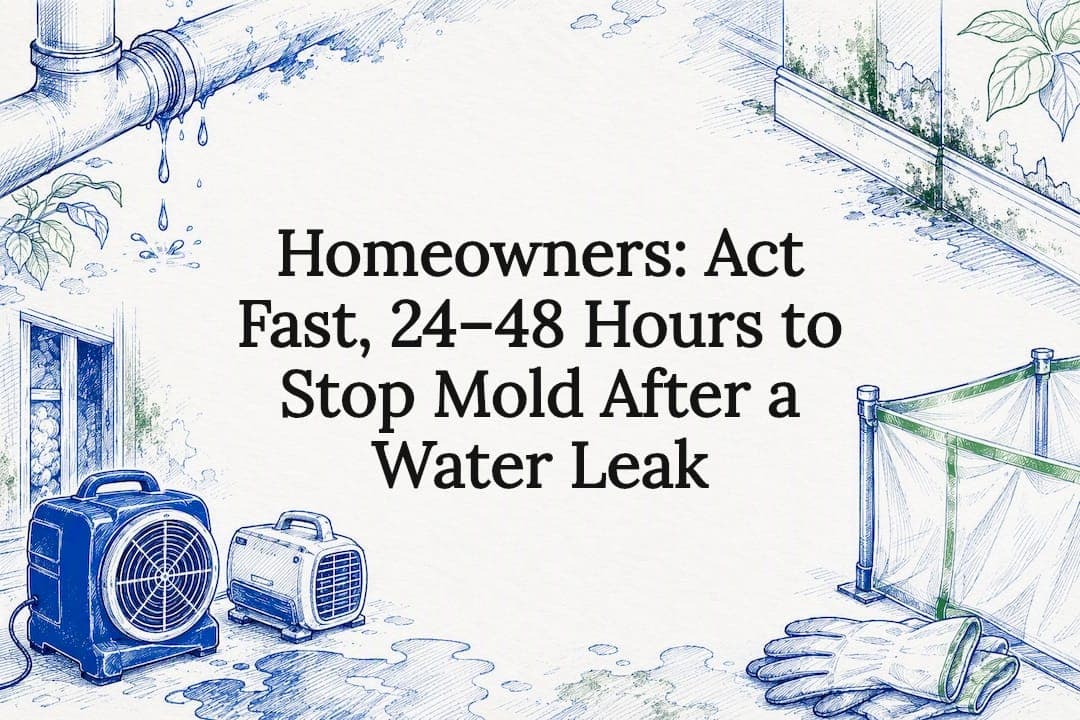
If you cannot dry wet materials within 24 to 48 hours after a leak, assume mold growth has already started. That window comes straight from CDC guidance on mold and health, and it is the single most useful number in this entire topic. Dry everything promptly. If drying cannot be done quickly, or the water was contaminated, or the affected area is large, call a certified remediator instead of relying on fans and open windows.
TL;DR:
- Mold can establish colonies within 24 to 48 hours if wet materials are not dried promptly, making rapid response essential.
- Porous materials soaked for more than two days, such as drywall and insulation, typically require removal rather than drying.
- Larger mold-affected areas, contaminated water sources, or porous materials soaked over 48 hours should be handled by certified professionals.
- Speed of response, including quick water removal and proper drying, directly influences whether cleanup can stay in DIY range or needs professional intervention.
- Preventing mold recurrence requires fixing the water source and maintaining moisture control in the long term.
Table of Contents
- How Fast Does Mold Grow After Water Damage?
- Signs of Mold After a Leak: What to Look and Smell For
- What to Do in the First Hours After a Leak
- DIY Cleanup vs. Calling a Professional Remediator
- What Professional Mold Remediation Actually Involves
- How to Stop Mold From Coming Back
- Why Response Speed Changes the Outcome
- Get Emergency Help Before the 48-Hour Window Closes
- Sources
- FAQ
How Fast Does Mold Grow After Water Damage?
The 24 to 48 hour window is not a scare tactic. It is a conservative, evidence-based estimate that shows up consistently in both CDC and EPA guidance because mold spores are already present in nearly every indoor environment, just waiting for moisture. Give them a damp surface and the right temperature, and colonies can establish within two days. Give them a week of standing water, and you are usually looking at a full remediation job rather than a cleanup.
Several factors speed things up or slow them down:
- Temperature. Mold favors 77 to 86 degrees Fahrenheit, but it tolerates a much wider range. Cooler basements slow growth slightly; warm attics accelerate it.
- Humidity. Anything above 60% relative humidity keeps materials from drying on their own, even after visible water is gone.
- Material porosity. Drywall, carpet padding, insulation, and particleboard absorb and hold water. Concrete, tile, and glass do not.
- Water source. Clean supply-line water behaves differently than water that has touched sewage, floodwater, or standing groundwater. Contaminated water carries spores and bacteria that colonize faster.
Carpet padding sitting under a slow leak for four days is often a total loss. The same carpet, extracted and dried within 24 hours, frequently survives. Drywall behaves similarly. Wood framing can usually tolerate more time before replacement becomes necessary, but painted or sealed wood traps moisture underneath, which is part of why sealing over a damp stud without fully drying it first is a mistake worth avoiding.
Signs of Mold After a Leak: What to Look and Smell For
Visible growth is the obvious signal: fuzzy or slimy patches in black, green, white, or orange, usually starting at baseboards, behind furniture, or along the bottom edge of drywall. A musty odor after water damage is often the earlier warning, especially when it shows up before you can see anything. Mold produces the smell before it produces a colony large enough to spot with the naked eye.
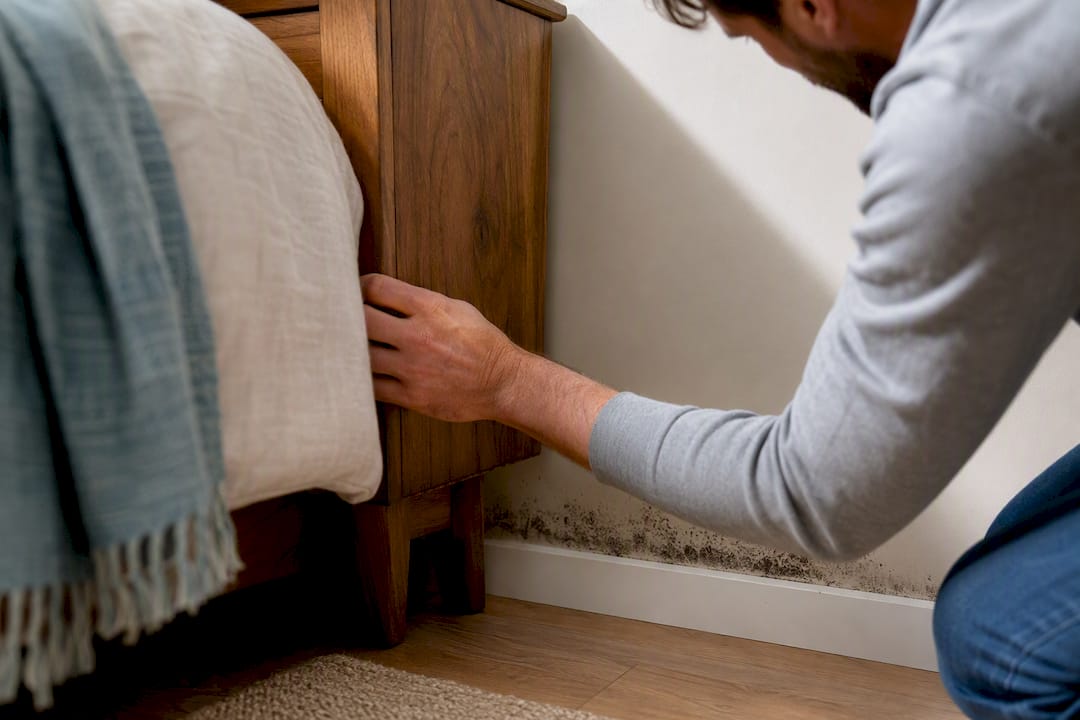
Hidden mold hides in predictable places: under carpet padding, inside wall cavities behind an outlet cover, beneath cabinets near a slow plumbing leak, and in HVAC ducting after flooding.
Mold growth timeline in one line: conditions inside a wet building can support visible colonization in as little as 24 to 48 hours, according to CDC guidance, which is why speed matters more than almost anything else on this list.
Health symptoms worth taking seriously include:
- Persistent coughing, wheezing, or nasal congestion that improves once you leave the house
- Eye, throat, or skin irritation with no other clear cause
- Worsening asthma or new respiratory symptoms in people who did not have them before
People with asthma, chronic respiratory conditions, or weakened immune systems face higher risk from mold exposure and should stay out of affected areas during cleanup, per CDC homeowner guidance. If someone in the house falls into that group, that alone is a reason to bring in a professional rather than DIY the job.
What to Do in the First Hours After a Leak
Safety comes before cleanup. Shut off the water source if the leak is still active, and cut power to any affected outlets or fixtures if there is standing water anywhere near wiring. If the leak came from a burst pipe, our step-by-step emergency guide walks through shutdown procedures in more detail, and a partner guide on furnace leaks covers a surprisingly common source homeowners overlook.
- Remove standing water immediately. A wet vacuum works faster than towels for anything beyond a small spill.
- Move wet belongings outdoors or to a dry room. Rugs, upholstered furniture, and boxes should not sit in the affected space.
- Open windows and doors, if it's safe to do so and the water is clean. Fresh airflow helps evaporation.
- Bring in dehumidifiers and air movers. A dehumidifier after water damage can cut structural drying time significantly compared to passive air drying alone.
- Skip the household fan if the water is contaminated. EPA guidance specifically warns against using fans on floodwater or sewage backups, since they can spread spores and contaminants through the air rather than just drying the surface, per EPA remediation guidance.
- Handle materials by type. Carpet and padding usually need to be lifted and dried separately (see our wet carpet drying guide); books and paper need fanning and cool, dry air; insulation soaked for more than 48 hours is often not salvageable, following EPA material guidance.
- Photograph everything and contact your insurer before you start removing damaged materials, noting the date and time the leak was discovered.
Pro Tip: Take a photo with a timestamp the moment you find the leak, then another every 24 hours during drying. Insurance adjusters move faster when the timeline is documented, not described.
DIY Cleanup vs. Calling a Professional Remediator
EPA guidance draws a rough line at 10 square feet of visible mold. Below that, a homeowner with gloves, N95 protection, and proper ventilation can often handle cleanup safely on hard, non-porous surfaces. Above it, or when the water source was gray or black water, professional help is the safer call.
- Small area (under roughly 10 square feet), clean water source, hard surface only: DIY is usually reasonable.
- Larger area, unknown or contaminated water, or porous materials soaked more than 48 hours: bring in a certified remediator.
- Sewage backup or floodwater: PPE and containment are required, and OSHA-informed handling matters, since these jobs often call for removing porous materials outright rather than trying to dry them in place.
- Recurring musty odor after "successful" cleanup, or health symptoms that persist: the DIY job likely missed hidden growth.
A homeowner's guide from the CDC notes that testing for mold is generally unnecessary for most residential cleanup jobs. Visual inspection and the absence of odor are usually the more practical indicators that a space is clean, rather than lab sampling.
That single point, confirmed by CDC, saves homeowners a lot of money on unnecessary testing kits. What actually matters is whether a certified team, ideally IICRC certified, used industrial dehumidifiers and containment to dry the structure completely, not whether a lab report came back with a number. Local examples of when that threshold gets crossed are worth reading if you're on the fence, like this breakdown of mold remediation timing in Olney.
What Professional Mold Remediation Actually Involves
A qualified remediation follows a fairly consistent sequence: inspect and assess moisture with meters, contain the affected area to stop spore spread, remove unsalvageable materials, dry the structure with industrial equipment, clean remaining surfaces, and verify the result before closing the job. EPA's mold course describes this drying step as the part that most often prevents a bigger, costlier tear-out later.
Material outcomes tend to follow a pattern, based on EPA's material-specific tables:
- Carpet and padding: cleanable if dried within 48 hours; padding soaked longer is usually discarded.
- Drywall: often removed and replaced if wet more than 48 hours, since it wicks moisture upward inside the wall cavity.
- Insulation: almost always discarded once saturated, since it cannot be effectively dried in place.
- Books, fabrics, and porous upholstery: salvageable if dried quickly; otherwise usually a loss.
- Hard surfaces (tile, glass, sealed wood, metal): cleanable with soap and water or a mild antimicrobial in nearly all cases.
Verification at the end relies on moisture meter readings back to baseline, no lingering musty smell, and no visible growth, not a lab test. A full remediation timeline breakdown covers how long each stage typically runs for a mid-size residential job.
How to Stop Mold From Coming Back
Cleanup without fixing the moisture source is a temporary win at best. Mold almost always returns if the underlying leak, whether from a roof, a pipe, a gutter, or bad grading around the foundation, does not get repaired.
- Fix the actual source: check roof leaks, plumbing joints, and gutter flow before you repaint anything.
- Run a dehumidifier in chronically damp basements or crawl spaces, and keep HVAC systems maintained so they actually control humidity rather than just temperature.
- Add attic and crawl space checks to a seasonal routine, particularly after storms; our attic mold guide covers the spots people miss most.
- Consider upgrading insulation or ventilation in rooms that show recurring condensation on windows or cold walls.
Pro Tip: If a window fogs up consistently on the inside during colder months, that's condensation feeding a future mold problem. Address the humidity now instead of waiting for the stain to show up.
Why Response Speed Changes the Outcome
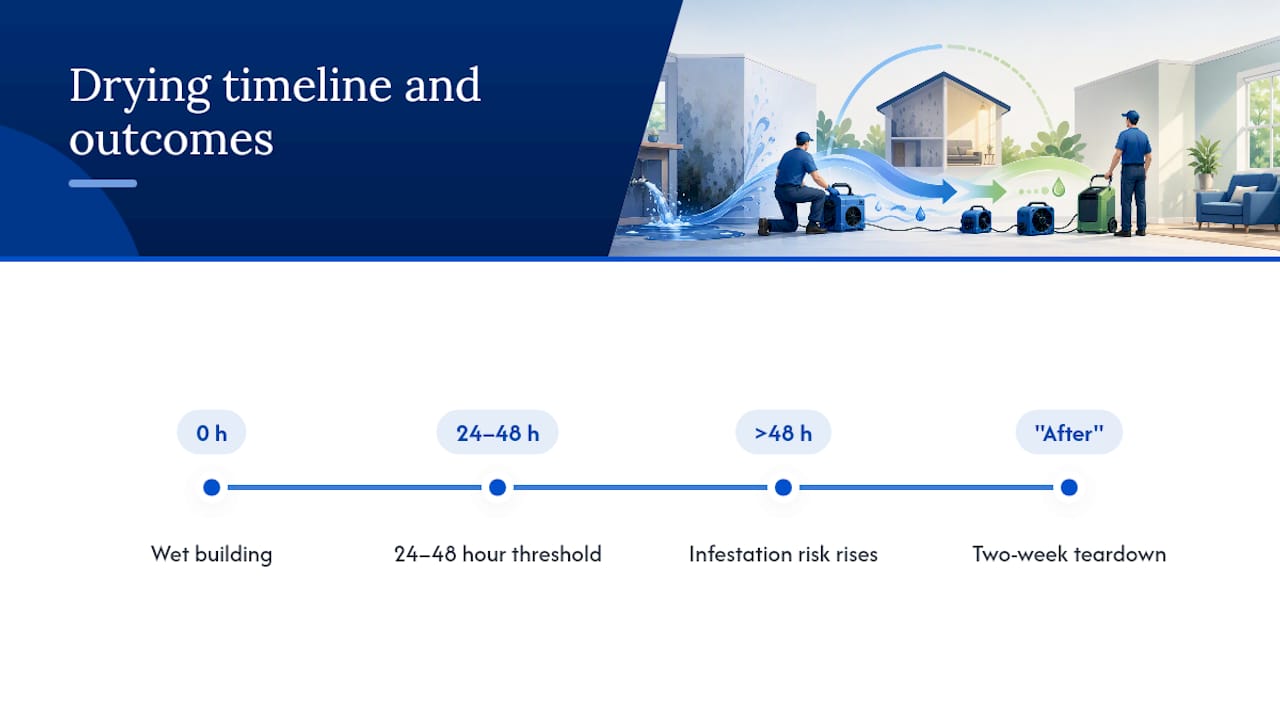
Every hour a wet building sits undried is an hour closer to that 24 to 48 hour threshold turning into a real infestation. Some restoration companies build 24/7 emergency responses around that math, aiming for rapid arrival times and using certified technicians to handle drying and containment work. Speed is the actual variable that determines whether a job is a same-day dry-out or a two-week teardown.
Readers who want more detail on the mechanics can check our 30-minute IICRC-certified response guide for Waldorf or the dehumidifier drying breakdown referenced earlier.
— Pure
Get Emergency Help Before the 48-Hour Window Closes
There are other routes here. You can rent a dehumidifier, call around for a general contractor, or wait on your insurance adjuster to recommend someone. Some restoration companies specialize in providing rapid emergency response, using certified technicians, and offering direct insurance billing to reduce the upfront costs for customers.
A first call typically covers three things: a moisture assessment of the affected area, containment if mold or contaminated water is present, and a drying plan with a timeline, not a guess. For carpet and padding specifically, Pure Resto's carpet cleaning service handles extraction and drying fast enough to often avoid a full replacement. If you are in the middle of a leak right now, the fastest next step is contacting Pure Resto's 24/7 restoration team directly and getting a technician moving before the 48-hour window narrows any further.
Sources
This article is general information, not a substitute for advice from a qualified doctor. Consult a qualified healthcare professional about your own circumstances before acting on anything here.
FAQ
How Do You Get Rid of Mold After a Water Leak?
Remove standing water, dry the area with dehumidifiers and air movers within 24 to 48 hours, discard porous materials that stayed wet too long, and clean hard surfaces with soap and water; larger or contaminated jobs need a certified remediator.
How Long Does It Take for Mold to Grow After a Leak?
Mold can begin developing in as little as 24 to 48 hours after water exposure, depending on temperature, humidity, and how porous the wet material is.
What Are the Warning Signs of Mold Exposure?
Common signs include persistent coughing, nasal congestion, throat or eye irritation, and worsening asthma symptoms, with people who have asthma or weakened immune systems facing higher risk; a doctor should evaluate any symptoms that persist after leaving the affected space.
Does Homeowners Insurance Cover Mold From Water Damage?
It depends on the cause: mold resulting from a sudden, covered event like a burst pipe is often covered, while mold from long-term neglect or slow leaks typically is not, so check your specific policy language and document the timeline immediately.
Do I Need to Test for Mold Before Cleaning?
Usually not. CDC guidance notes that visual inspection and the absence of musty odor are typically sufficient to confirm a successful cleanup, without routine lab testing.