
Most residential mold remediation jobs require 1–5 days of active work; once you add drying time, lab clearance, and any reconstruction, total calendar time for a moderate job typically runs 1–3 weeks. Here's what that looks like phase by phase:
- Inspection and assessment: 2–4 hours (same day or next day)
- Containment setup: 2–8 hours, often overlapping with inspection
- Material removal: 1–3 days depending on scope
- Cleaning and disinfection: 1–2 days
- Drying and dehumidification: 2–5 days (runs concurrently with or immediately after removal)
- Clearance testing and lab results: 1–3 days waiting on lab turnaround
- Reconstruction and repairs: 1–5 days or more if structural work is needed
The single most important thing to understand: active remediation and total calendar time are two different numbers. A crew can finish physical removal in two days, but you may still be waiting on lab results or drywall repairs for another week.
Key Takeaways
Most residential mold remediation jobs require 1–5 days of active work, with total calendar time running 1–3 weeks once drying, lab clearance, and reconstruction are included.
| Point | Details |
|---|---|
| Active vs. total time | Active remediation takes 1–5 days; total project time including drying and testing runs 1–3 weeks for moderate jobs. |
| Clearance test is the finish line | A passing independent lab result, not the crew's last day on-site, officially ends the remediation process. |
| When to vacate | Healthy adults can often stay for small contained jobs; high-risk occupants (infants, immunocompromised) should leave until clearance is confirmed. |
| Call a pro when | Growth covers porous materials, exceeds 10 square feet, involves HVAC, or has an unresolved moisture source. |
| Purerestomd in Maryland | IICRC-certified, 30-minute emergency response, on-site drying equipment, and direct insurance billing for Maryland homeowners. |
Table of Contents
- What mold remediation actually covers
- The mold remediation timeline, phase by phase
- What makes your job take longer (or shorter)
- Safety, re-occupancy, and who should leave the house
- Professional remediation versus DIY: when to call a pro
- What a typical local remediation job actually looks like
- Why speed alone is the wrong goal
- Purerestomd is ready when you need a certified crew in Maryland
- Sources
- FAQ
What mold remediation actually covers
Mold remediation is the professional process of identifying, containing, removing, and verifying the elimination of mold growth in a building. The industry standard that licensed contractors follow is IICRC S520, which defines the phases, containment requirements, and performance goals for the work. The EPA's remediation guidance reinforces this framework and recommends addressing moisture sources and drying affected materials within 24–48 hours to prevent further growth.
The goals of a properly scoped remediation project are:
- Stop active growth by eliminating or controlling the moisture source
- Remove contaminated materials that cannot be cleaned (drywall, insulation, carpet)
- Clean and treat salvageable surfaces using HEPA vacuuming and antimicrobial agents
- Dry the structure to below acceptable moisture thresholds
- Verify results through independent clearance testing before reconstruction
Remediation is not the same as reconstruction. The remediation crew removes and cleans; a separate contractor typically handles drywall replacement and painting. Confusing the two is one of the most common reasons homeowners underestimate total project time.
The mold remediation timeline, phase by phase
Each phase of the mold removal process has a realistic duration range. The table below shows typical active work days for a small, medium, and large residential job.
| Phase | Small Job (1 room, <10 sq ft) | Medium Job (1–2 rooms) | Large Job (multiple rooms / HVAC) |
|---|---|---|---|
| Inspection and assessment | 2–4 hours | Half day | 1–2 days |
| Containment setup | 2–4 hours | 4–8 hours | 1–2 days |
| Material removal | Half day | 1–2 days | 3–5 days |
| Cleaning and disinfection | Half day | 1–2 days | 2–3 days |
| Drying and dehumidification | 1–2 days | 2–4 days | 4–7 days |
| Clearance testing (lab) | 1–2 days | 1–3 days | 2–3 days |
| Reconstruction | Minimal | 1–3 days | 5–10+ days |
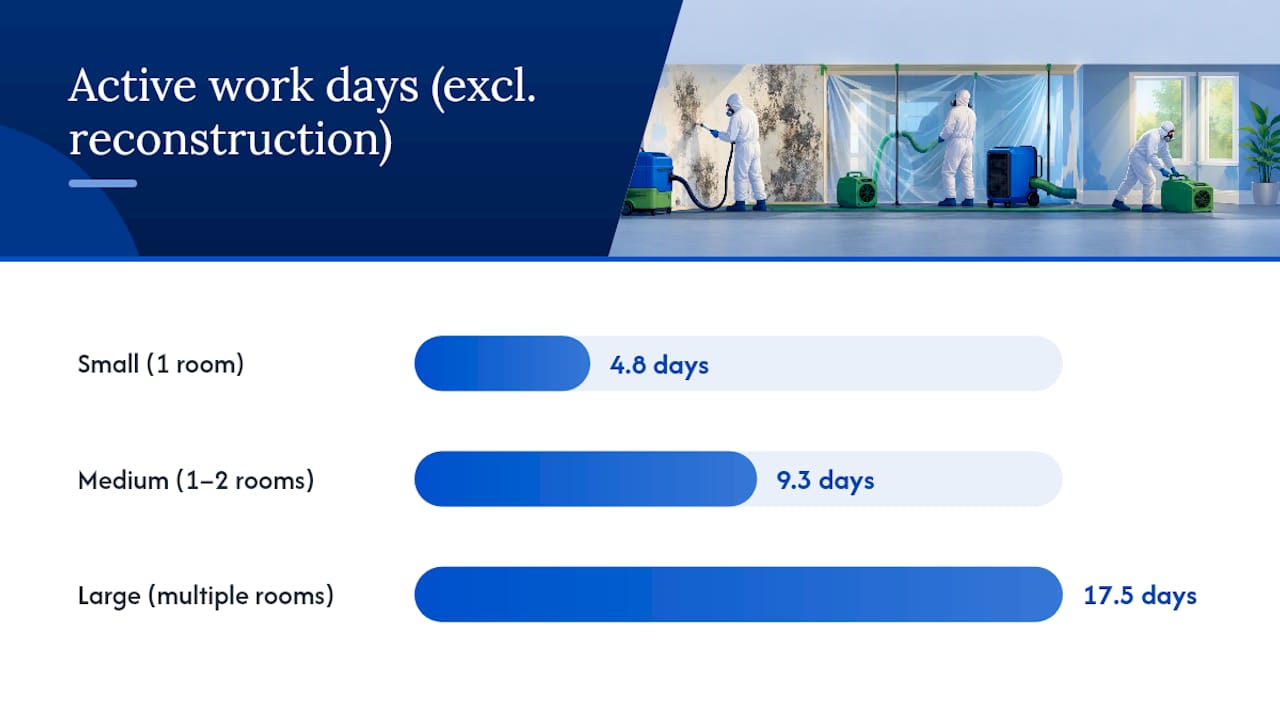
A few things worth knowing about how these phases interact. Containment is usually set up the same day as the initial inspection, so those two phases rarely add separate days to the calendar. Drying equipment typically runs continuously starting the day removal ends, meaning the drying clock starts before the crew leaves. That overlap is one of the biggest time-savers a coordinated professional crew delivers.
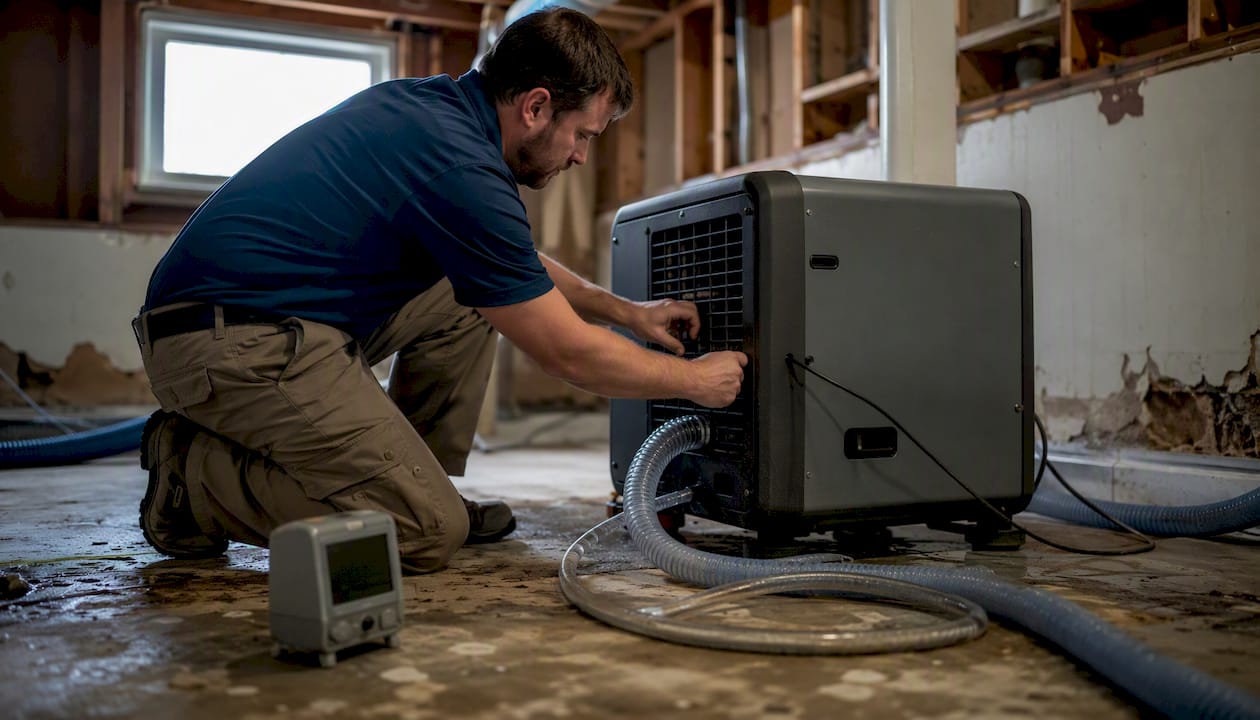
For a medium single-room job, a realistic schedule looks like this: inspection and containment on Day 1, removal and initial cleaning on Days 2–3, drying equipment running through Day 6, clearance samples collected on Day 7, lab results back on Day 8 or 9. Reconstruction, if needed, follows after a passing clearance.
Pro Tip: Book your assessor and remediation contractor at the same time. When the assessor's report goes directly to the crew before they arrive, you skip 1–2 idle days waiting for a scope of work to be written and approved.
What makes your job take longer (or shorter)
Not every home falls neatly into the 1–5 day range. Several variables push jobs toward the longer end of the mold cleanup timeline, and knowing which ones apply to your situation helps you set realistic expectations.
High-impact variables:
- Square footage affected: Small isolated patches under 10 square feet can often be handled in 1–2 days. Whole-home contamination or HVAC involvement commonly extends active work into multiple weeks.
- Location of growth: Mold behind walls, under flooring, or inside ceiling cavities requires demolition before removal can begin. That adds 1–3 days per affected assembly.
- Material type: Non-porous surfaces (tile, metal, glass) can be cleaned in place. Porous materials like drywall, insulation, and wood framing almost always need to be cut out and discarded, per EPA cleanup guidance.
- Moisture source complexity: If the water source is still active (a slow roof leak, a plumbing issue inside a wall), it must be repaired before remediation begins. Waiting on a plumber adds days.
- HVAC involvement: Contaminated ductwork requires a separate duct-cleaning protocol and often a specialist. Budget an additional 2–5 days when HVAC is affected.
- Lab turnaround: Clearance samples go to an independent lab. Results typically return in 24–72 hours, but a failed clearance means repeat cleaning and retesting, which can add 3–5 days to the total.
- Access and permits: Crawl spaces, attics, and tight mechanical rooms slow physical work. Structural repairs in some jurisdictions require a permit, which adds waiting time.
Quick self-assessment: which bucket does your job fall into?
- Growth is visible on one non-porous surface, under 10 square feet, moisture source is fixed. Small job, 1–2 days active.
- Growth covers one or two rooms, involves drywall or wood, moisture source is identified. Medium job, 3–5 days active, 1–2 weeks total.
- Growth is in multiple rooms, behind walls, or in HVAC. Large job, 1–2+ weeks active, 3–6 weeks total calendar.
Restoration-industry reporting consistently cautions against any contractor promising a one-day completion for a moderate job. Skipping containment, HEPA scrubbing, or independent clearance testing shortens active days but usually lengthens total calendar time when clearances fail.
Safety, re-occupancy, and who should leave the house
Whether you need to vacate during remediation depends on the size of the job and who lives in the home.
For small, well-contained jobs in a single room, most healthy adults can remain in the home if the containment barrier fully separates the work area from living spaces. For medium and large jobs, temporary relocation is the safer choice. Active remediation generates airborne spores even with HEPA air scrubbers running, and containment barriers are not airtight.
The CDC identifies infants, elderly individuals, people with asthma or allergies, and immunocompromised individuals as the groups most vulnerable to mold exposure. Anyone in these categories should leave the home before active work begins and not return until a passing clearance test is confirmed.
For healthy adults in a home with a medium or large job, a practical guideline is to stay out during active removal and cleaning, then wait 24–48 hours after the crew finishes physical work before returning. The official finish line is not the last day the crew is on-site. It's a passing clearance test.
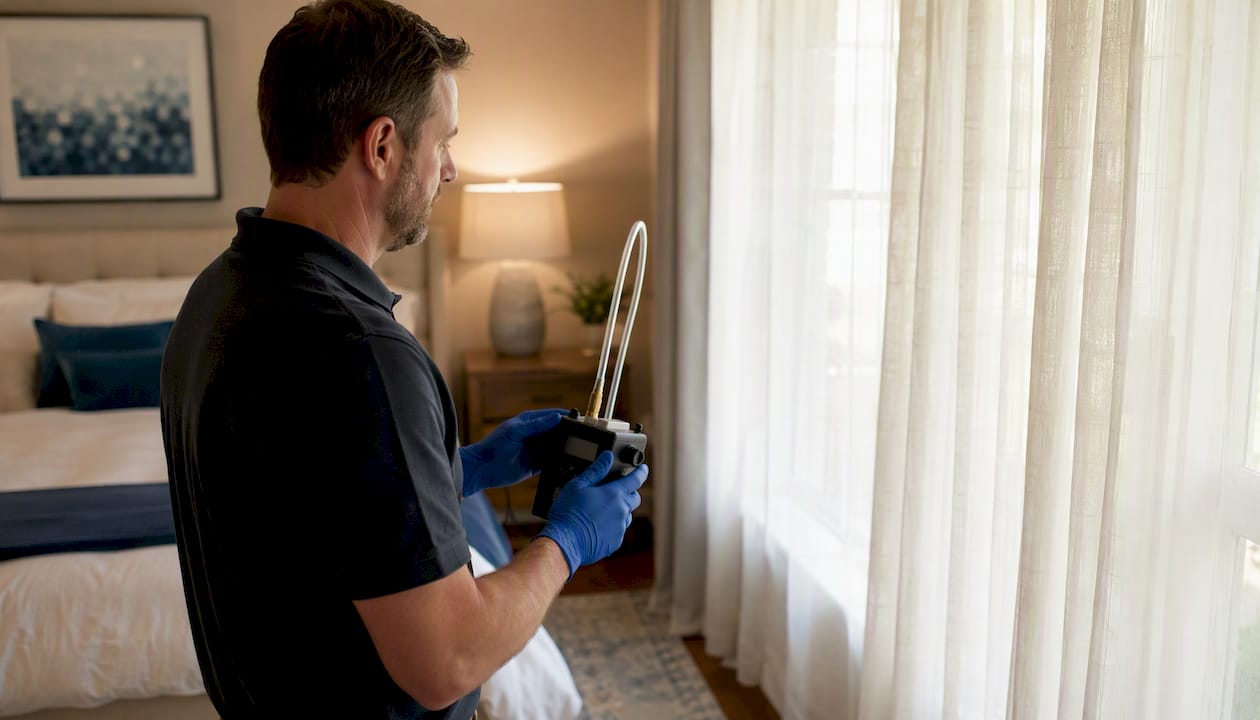
Clearance testing involves an independent inspector collecting air and surface samples after physical work and drying are complete. Labs typically return results in 24–72 hours. A passing result confirms indoor mold levels have returned to normal. A failing result means the crew goes back in, and the clock resets on testing.
Professional remediation versus DIY: when to call a pro
The EPA's guidance draws a practical line: small patches on hard, non-porous surfaces can be scrubbed with detergent and water by a careful homeowner. Once mold involves porous materials, covers more than roughly 10 square feet, or has an unresolved moisture source, professional remediation is the right call.
When DIY is reasonable:
- Visible growth on tile grout, a bathroom ceiling, or a non-porous countertop
- Total affected area under 10 square feet
- Moisture source is already fixed and the area is fully dry
- No one in the household is immunocompromised or has respiratory conditions
When to call a professional:
- Growth is on drywall, wood framing, insulation, or carpet
- You can smell mold but can't see it (hidden contamination)
- The moisture source is still active or unknown
- HVAC or ductwork may be involved
- Anyone in the home is in a high-risk health category
- The affected area is larger than 10 square feet
A professional crew shortens total calendar time in ways a DIY approach cannot replicate. On-site drying equipment runs continuously, containment is set up correctly the first time, and pre-booked lab testing eliminates the delay of finding an independent inspector after the fact. When evaluating contractors, ask specifically for IICRC S520 compliance, proof of liability insurance, and a written scope that includes independent clearance testing. The ANSI/IICRC S520 2024 standard is the current version contractors should be referencing when scoping work.
What a typical local remediation job actually looks like
Here's a realistic day-by-day calendar for a medium single-room job handled by a coordinated local crew, the kind of workflow Purerestomd runs for Maryland homeowners.
- Day 1 (morning): Certified inspector arrives, performs moisture mapping and visual assessment, identifies affected materials and the moisture source. Containment plastic and negative air pressure are established the same afternoon.
- Day 1 (afternoon): HEPA air scrubbers are placed and running. Crew begins removing contaminated drywall and insulation.
- Day 2: Removal is completed. Affected framing is HEPA-vacuumed and treated. Industrial dehumidifiers and air movers are set up and left running.
- Days 3–5: Drying phase. Moisture readings are checked daily. Equipment stays until readings hit target thresholds.
- Day 6: Independent clearance inspector collects air and surface samples.
- Day 7–8: Lab results return. With a passing clearance, the containment comes down and reconstruction can begin.
Coordinating the assessor, remediation crew, and lab booking up front reliably shortens calendar duration because it eliminates idle waiting days between phases.
Pro Tip: Ask your contractor whether they handle direct insurance billing. When the crew submits documentation directly to your insurer, you avoid the back-and-forth that can add 3–5 days of administrative delay to your project start date.
A 30-minute emergency response time matters most at the beginning of this calendar. The faster containment goes up after discovery, the less the mold spreads to adjacent materials, and the smaller the scope of removal. Purerestomd's mold inspection services in Adelphi, MD and Columbia, MD are available 24/7 for exactly this reason.
Why speed alone is the wrong goal
Speed matters, but it's the wrong metric to optimize for. The correct end point for any mold remediation project is a passing independent clearance test, not the last day the crew was on-site.
Contractors who promise unusually fast completions on moderate jobs often skip or compress the steps that actually protect the home long-term: proper containment, adequate drying time, and independent verification. A job that finishes in two days but fails clearance testing has not finished. It has just created a second mobilization, a second round of lab fees, and a longer total calendar than a properly paced job would have produced.
The drying phase is where most shortcuts happen. Structural materials need to reach specific moisture content levels before reconstruction can begin. Rushing past this step leads to mold returning inside newly installed drywall, sometimes within weeks. A slightly longer schedule that includes full drying and a verified clearance pass is almost always the better outcome.
Purerestomd is ready when you need a certified crew in Maryland
When mold is confirmed in your home, the fastest path to a verified clearance is a crew that shows up within 30 minutes, sets containment immediately, and handles insurance documentation without putting that work on you.
Purerestomd provides 24/7 emergency mold remediation across Maryland with IICRC-certified technicians, on-site drying equipment that eliminates rental delays, and direct insurance billing. There's no waiting for a third-party equipment company or a separate assessor to coordinate schedules. The crew arrives with everything needed to start containment the same day. For homeowners and property managers in Maryland who need a mold inspection before committing to a full remediation scope, that service is available around the clock as well. Call or contact Purerestomd now to get a certified technician to your property today.
Sources
The following sources back the guidance in this article and are worth bookmarking if you want to verify standards or read the primary guidance yourself.
- Mold Remediation in Schools and Commercial Buildings (EPA moldremediation.pdf)
- IICRC S520: Standard for Professional Mold Remediation
- How Long Does Mold Remediation Take? A Full Timeline (RestoreAdvisor)
- CDC — Mold: Health Effects and Data
- How Long Does Mold Remediation Take? Honest Timelines | 4D Restoration
This article is general information, not a substitute for advice from a qualified doctor. Consult a qualified healthcare professional about your own circumstances before acting on anything here.
FAQ
How long does mold remediation take for a typical home?
Most residential jobs require 1–5 days of active remediation work. Total calendar time, including drying, lab clearance testing, and reconstruction, typically runs 1–3 weeks for moderate jobs.
How long do you have to leave the house for mold remediation?
For small, well-contained jobs, healthy adults can often stay in the home. For medium or large jobs, plan to vacate during active removal and cleaning, then wait 24–48 hours after physical work ends before returning, or until a passing clearance test is confirmed.
Can you live in a house after mold remediation?
Yes, once a passing independent clearance test confirms indoor mold levels have returned to normal. The CDC recommends that infants, elderly individuals, and immunocompromised people wait for confirmed clearance before re-entering.
How soon can mold come back after remediation?
Mold can return within days if the original moisture source was not fully repaired. A properly completed remediation that fixes the moisture source, dries the structure to target thresholds, and passes clearance testing significantly reduces the risk of recurrence.
How long does it take to feel better after mold remediation?
Symptom improvement varies by individual and exposure level. Most people notice improvement within a few days of leaving the contaminated environment, though those with respiratory conditions or mold sensitivities may take longer to recover fully.