

Stop the water source, then extract every drop of standing water you can with a wet-dry vacuum, towels, or a squeegee. Once the bulk water is gone, open windows or run air conditioning, point fans at the carpet, and get a dehumidifier running in the room. You have a narrow window here: mold can begin colonizing damp carpet fibers within 24 to 48 hours, and a carpet left wet for that long often can't be saved without professional intervention.
Before you do anything else, grab these:
- Wet-dry shop vacuum
- Old towels or a squeegee
- Box fans or high-velocity air movers
- A portable dehumidifier
- A moisture meter, if you own or can borrow one
Key Takeaways
Fast extraction followed by continuous airflow and dehumidification within the first 24 to 48 hours determines whether wet carpet survives or needs full replacement.
| Point | Details |
|---|---|
| Act within 24 to 48 hours | Mold can begin colonizing damp carpet fibers inside this window, so extraction can't wait. |
| Extraction comes first | A wet-dry vacuum or professional extractor removes more water than fans alone ever will. |
| Lift the carpet to check padding | Padding soaked over 48 hours or by gray/black water usually needs replacement, not drying. |
| Confirm dryness with a moisture meter | Target a reading below 15 percent on both carpet and subfloor before calling the job done. |
| Call Purerestomd for large or contaminated events | Their 30-minute response, IICRC-standard equipment, and direct insurance billing cover what DIY tools can't. |
Table of Contents
- How to Identify Water Categories Before You Start Wet Carpet Drying
- Stop the Source and Handle Safety First
- How Do You Extract Standing Water Fast?
- Should You Lift the Carpet to Check the Padding?
- How Long Does It Take to Dry a Carpet With Fans and a Dehumidifier?
- Cleaning, Disinfecting, and Getting Rid of Wet Carpet Smell
- When Should You Call a Professional Restoration Company?
- Wet Carpet Drying Checklist and Essential Tools
- Tips for Safely Using Drying Equipment to Prevent Damage or Hazards
- How to Spot Mold or Mildew Before It Spreads
- Preventive Steps to Protect Carpet While It Dries
- Why Speed Matters More Than Perfect Technique
- Get Immediate Help for a Wet Carpet Emergency
- Sources
- FAQ
How to Identify Water Categories Before You Start Wet Carpet Drying
Not all wet carpet is the same problem. Category 1 is clean water, a burst supply line or an overflowing sink, and it's generally safe to handle yourself if you catch it fast. Category 2 is gray water, from a washing machine, dishwasher, or shower drain, and it carries some contaminants. Category 3 is black water, sewage backups or floodwater, and it poses real health risks.
- Category 1: DIY drying is usually fine within the first 24 to 48 hours.
- Category 2: Wear gloves and a mask; padding often needs replacing.
- Category 3: Skip the DIY approach entirely and call a restoration company.
Contamination level also decides the padding's fate. Clean water caught early can sometimes save the pad underneath, but gray or black water almost always means the padding gets pulled and tossed, according to NC State Extension.
Stop the Source and Handle Safety First
Shut off the water main or isolate the failed appliance before you touch anything wet. If standing water is anywhere near outlets, switches, or a breaker panel, do not walk in until the power to that area is cut.
- Gloves, boots, and a mask for gray or black water exposure
- No entry if there's any chance of electrical contact
- Photograph the damage with timestamps before cleanup starts, and call your insurer early
OSHA's guidance on water-damaged buildings outlines these exposure risks in more detail, and it's worth a skim if the water source is anything other than a clean supply line.
How Do You Extract Standing Water Fast?
Extraction is the step that determines everything else. Skip it or rush it, and you're fighting a losing battle against drying time no matter how many fans you throw at the problem.
- Run a wet-dry vacuum in slow, overlapping passes, working from the room's edges toward the center.
- If you don't own one, fold towels into thick pads, press them into the carpet with your foot, and wring them out repeatedly.
- A squeegee pushed toward a floor drain or door threshold speeds up the last stretch of standing water.
Skip a household vacuum entirely. Regular vacuums aren't built for wet pickup and can short out or shock you.
- Small spill, one or two rooms: buy or rent a shop vacuum, usually available at any hardware store.
- Larger flood, multiple rooms: rent a commercial extractor for the day rather than fighting it with a five-gallon shop vac.
Pro Tip: Professional-grade extractors pull out far more water per pass than a consumer shop vac, which is why proper extraction cuts total drying time so dramatically compared to skipping straight to fans.
Should You Lift the Carpet to Check the Padding?
Yes, and don't skip this step even if the surface feels dry to the touch. Water travels downward and sits in the padding long after the carpet fibers look fine.
- Find a corner or seam and pull the carpet loose from the tack strip.
- Roll it back carefully, a few feet at a time, to expose the padding underneath.
- Press a hand into the pad and check the subfloor, plywood, particleboard, or concrete, for softness, swelling, or discoloration.
Run through this checklist before deciding what stays and what goes:
- Padding soaked less than 48 hours, clean water only: often salvageable.
- Padding exposed to gray or black water, or wet more than 48 hours: cut it out and replace it.
- Particleboard subfloor that's swollen or spongy: it's likely disintegrating and needs replacement, since particleboard can break down within days of sustained moisture.
Replacing padding costs a fraction of what mold remediation runs later, so when you're unsure, err toward tearing it out.
How Long Does It Take to Dry a Carpet With Fans and a Dehumidifier?
Extraction, airflow, and dehumidification each do a different job, and skipping any one of them stalls the whole process. Extraction pulls out the bulk of the water. Air movers evaporate what's left in the fibers and pad. The dehumidifier pulls that moisture out of the air before it resettles into the carpet or nearby drywall.
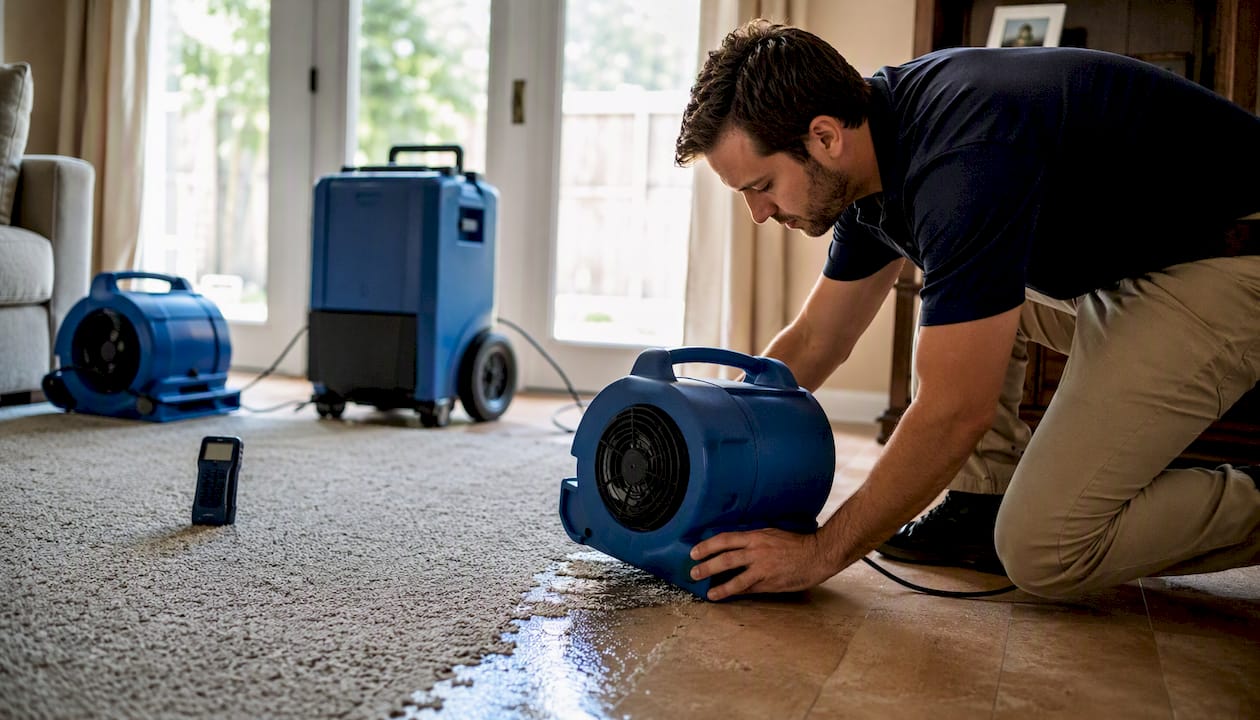
Placement matters more than most people assume. Position air movers so they blow directly across the carpet's pile, angled low, and if you've lifted a section of carpet off the tack strip, slide a fan so it pushes air underneath the carpet itself, not just across the top. Close the room's doors and windows once fans are running so the dehumidifier can work on a contained pocket of air instead of the whole house. If you don't have a dehumidifier, cross ventilation with windows and box fans is a workable substitute, though slower.
Skip the space heater. Warm air holds more moisture, and without a dehumidifier pulling that moisture out, heating the room actually raises humidity and accelerates mold risk instead of solving anything.
Run the fans and dehumidifier continuously, not on and off, for at least 48 to 72 hours. Empty the dehumidifier's tank every few hours during heavy saturation; a full tank stops removing moisture from the air entirely.
Pro Tip: A moisture meter is the only reliable way to confirm the carpet is actually dry. Surface touch misses moisture trapped in the pad or subfloor, which is exactly where mold tends to start.
Check readings daily. You're aiming for a moisture meter reading under roughly 15 percent on both the carpet and the subfloor before you consider the job finished and put furniture back.
Cleaning, Disinfecting, and Getting Rid of Wet Carpet Smell
Once the moisture meter confirms everything is dry, clean and disinfect before you do anything else.
- Disinfect a bare subfloor with a diluted bleach solution, but never use bleach directly on wool carpet or wool-blend rugs, it will discolor and weaken the fibers.
- Wait until the carpet is completely dry before sprinkling baking soda for odor control, then vacuum it up thoroughly after a few hours.
- Steam clean or shampoo the carpet after drying to lift residue and any lingering musty carpet smell.
If the smell persists after cleaning or you spot dark spots, fuzzy growth, or discoloration anywhere on the carpet or baseboards, stop the DIY process. That's mold, not just odor, and it needs a professional response.
Pro Tip: A musty smell that returns days after drying usually means humidity crept back above 60 percent and reactivated dormant microbes hiding in the pad. Keep indoor humidity under 50 percent for a week after any water event.
When Should You Call a Professional Restoration Company?
Some situations are past the point where a shop vac and a box fan will save the carpet. Watch for these red flags:
- Water came from a sewage backup, flooding, or any gray or black water source
- The affected area is larger than roughly 5 square meters
- You see visible mold growth or smell persistent mustiness after drying
- The subfloor feels soft, spongy, or shows signs of swelling
- The carpet is still damp after 48 hours of active drying
Professionals bring truck-mounted extractors, commercial air movers, and low-grain-refrigerant dehumidifiers that pull moisture faster than anything sold at a hardware store. They also map moisture levels room by room, follow IICRC restoration standards, and coordinate directly with your insurance company so you're not stuck negotiating a claim on top of everything else.
A restoration crew that shows up with a moisture meter and starts documenting readings before touching the carpet is doing the job correctly. That documentation is what your insurance adjuster will want to see.
Before a contractor arrives, take photos of the damage, move small valuables and electronics out of the affected room, and jot down any areas that felt unusually wet or smelled off. Ask about their IICRC certification, what equipment they're bringing, and a realistic timeline for drying.
Wet Carpet Drying Checklist and Essential Tools
Keep this nearby for the first hour, first day, and follow-up monitoring:
- First hour: Stop the water source, extract standing water, lift carpet edges for airflow.
- First 24 hours: Run fans and dehumidifier continuously, check moisture readings once.
- Ongoing: Monitor daily until readings stay under 15 percent for two consecutive checks.
| Tool | What It Does | Rent or Buy |
|---|---|---|
| Wet-dry vacuum | Removes standing water fast | Buy for small homes, rent for large floods |
| Air movers | Evaporates moisture from fibers and pad | Buy 1 to 2 units |
| Dehumidifier | Pulls moisture out of room air | Buy or rent depending on room size |
| Moisture meter | Confirms carpet and subfloor are dry | Buy, inexpensive and reusable |
Wear gloves and a mask any time the water source is gray or black; skip bare-hand contact even during quick cleanup passes.
Tips for Safely Using Drying Equipment to Prevent Damage or Hazards
Fans and dehumidifiers running for two or three days straight put real strain on your home's electrical system, so spread the load across multiple outlets and circuits instead of daisy-chaining power strips off one wall socket. Overloaded circuits are a common cause of tripped breakers, or worse, during extended drying jobs.
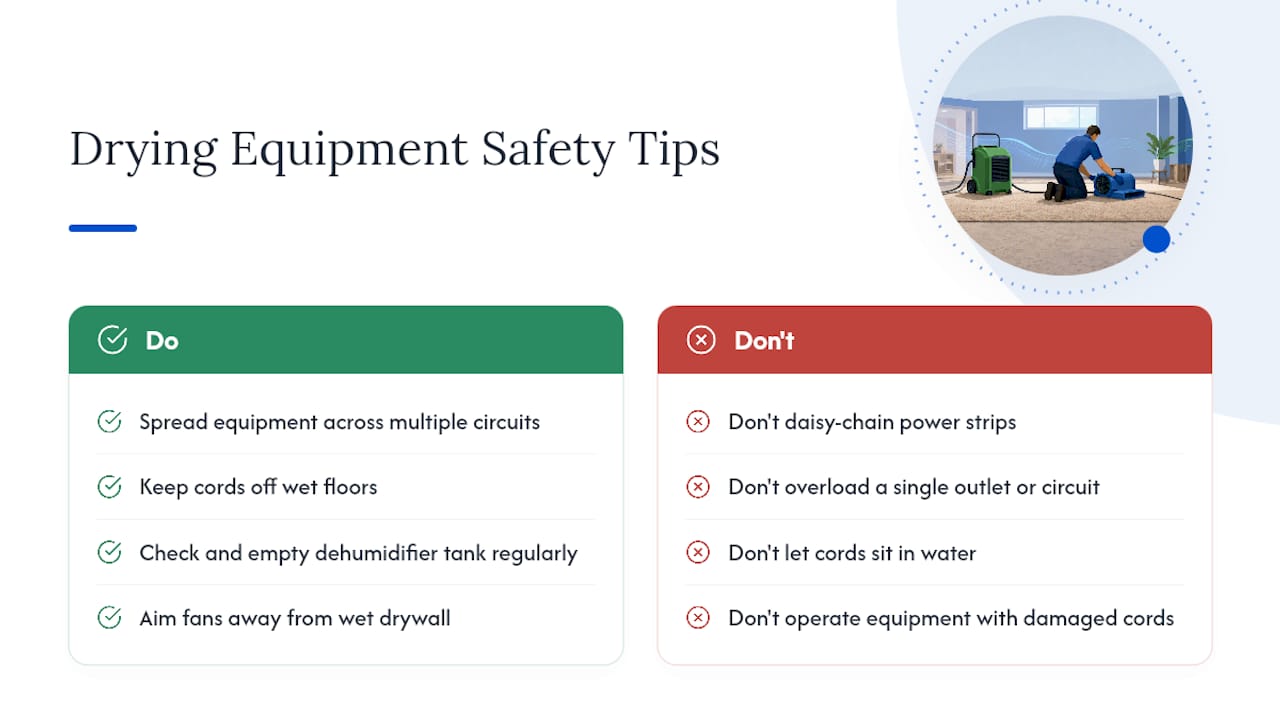
Keep cords out of any remaining standing water and off wet flooring entirely. Water and electrical cords are a dangerous combination, and a frayed cord sitting in a damp room is a shock hazard waiting to happen. Elevate cords on furniture or hooks where possible.
Never leave a dehumidifier's water tank unattended for more than a few hours during heavy saturation. A full tank stops removing moisture, but it can also overflow onto the very carpet you're trying to dry, undoing your progress and creating a slip hazard nearby.
Position fans so they don't blast directly at exposed drywall or baseboards that are already wet. Overly aggressive airflow on saturated drywall can push moisture deeper into the wall cavity instead of pulling it out, setting up a hidden mold problem behind the walls.
If you're running equipment overnight, crack a window slightly even with a dehumidifier working, unless outdoor humidity is higher than indoor humidity. Stale, sealed rooms with no fresh air exchange can trap odors and slow the last stage of drying, even when the numbers on your moisture meter look close to target.
Check that any rented equipment has a current safety inspection tag, and never operate an extractor or air mover with a damaged cord or cracked housing.
How to Spot Mold or Mildew Before It Spreads
Mold doesn't always announce itself with visible fuzz right away. The earliest sign is usually a smell, a musty, earthy odor that lingers even after you've run fans for a day or two. If that smell doesn't fade as the carpet dries, treat it as an early warning rather than something to wait out.
Discoloration is the next signal. Look for dark spots, greenish patches, or black speckling along baseboards, carpet edges, or anywhere the carpet meets a wall. These spots often show up first in corners and under furniture, the areas that get the least airflow during drying.
Check the underside of any carpet section you've lifted for inspection. Mold frequently grows on the back of carpet backing or on the pad itself before it becomes visible from the top, which is exactly why lifting the carpet during the drying process matters as much as running the fans.
Pay attention to allergy-like symptoms in the household, too. Increased sneezing, coughing, or eye irritation in a specific room can point to airborne mold spores before you ever see a visible patch. If anyone in the house develops these symptoms during or shortly after a water event, treat it as a reason to schedule a mold inspection rather than waiting to see if the smell goes away on its own.
Touch is not a reliable test here. A carpet can feel dry on the surface while the pad underneath stays damp enough to support mold growth for days. That's the gap a moisture meter closes, and it's also why a lingering odor after the carpet feels dry to the hand deserves a second look rather than a shrug.
Preventive Steps to Protect Carpet While It Dries
Moving furniture off the wet carpet is one of the simplest things you can do, and one of the most skipped. Wood furniture legs can bleed dye or finish into damp fibers, and the weight of furniture sitting on wet carpet compresses the pile and traps moisture underneath, slowing the entire drying process.
Use aluminum foil squares or small wood blocks under furniture legs that can't be fully removed from the room. This keeps the weight off the carpet fibers directly and prevents rust rings or dye transfer from metal furniture feet sitting in damp conditions.
Keep foot traffic to a minimum while equipment runs. Walking across drying carpet pushes moisture back down into the pad from the surface, which works against everything the fans and dehumidifier are trying to accomplish. If you must cross the room, stick to a single path rather than wandering across the whole area.
Block off the room from pets and kids where possible. Curious pets tend to walk directly through the wettest sections, and paw traffic re-embeds dirt and moisture into fibers you've already started drying.
Avoid placing rugs, mats, or plastic sheeting over the drying carpet, even temporarily. Anything that blocks airflow to the surface undoes the work the air movers are doing and can trap humidity right where mold likes to start.
If the water intrusion came from a leaking window or roof rather than a plumbing failure, it's worth having that source inspected separately. A contractor who specializes in diagnosing water intrusion around windows can catch a recurring leak path before it soaks the same section of carpet again next season.
Why Speed Matters More Than Perfect Technique
The homeowners who save their carpet aren't the ones with the fanciest equipment. They're the ones who started extraction within the first hour instead of waiting to see if it would dry on its own. That 24 to 48 hour window is unforgiving, and no amount of scrubbing later fixes a decision to wait.
DIY drying works for small, clean-water spills caught fast. Anything larger, dirtier, or slower gets past what a box fan and a shop vac can fix, and that's when professional-grade extraction actually earns its cost.
Get Immediate Help for a Wet Carpet Emergency
If the water source was anything other than a clean supply line, or your carpet is still damp after a day of running fans, that's your signal to stop troubleshooting and call in equipment built for the job. Purerestomd runs a 30-minute emergency response across Maryland, which means the gap between "still wet" and "professionally extracted and drying correctly" is measured in minutes, not another lost day inside the mold-growth window.

Purerestomd's crews arrive with truck-mounted extraction, high-velocity air movers, and moisture-mapping equipment that pinpoints exactly where the pad and subfloor still hold water, backed by IICRC-standard restoration practices. For gray or black water events, large-area flooding, or carpet that's stayed damp past 48 hours, that level of equipment isn't optional anymore. Every job includes direct insurance billing, so you're not stuck fronting costs or negotiating a claim on your own while the clock keeps running.
Whether you're dealing with a burst pipe in Bowie or a flooded basement in Columbia, schedule an inspection with Pure Resto or check carpet cleaning availability in Waldorf to get a crew moving toward your address today.
Sources
- Water-Damaged Carpets and Rugs | NC State Extension Publications
- Osha
- How to Dry Wet Carpet Fast: A Step-by-Step Guide (2026) - Office And Commercial Cleaning Service in Adelaide
- Carpet Water Damage Guide - Pureflow Precision Drying
- How to Dry Carpet Fast: Ultimate Guide 2026
FAQ
How Do I Dry a Wet Carpet Quickly?
Extract standing water with a wet-dry vacuum, lift the carpet to expose the padding, then run high-velocity fans with a dehumidifier continuously for 48 to 72 hours until a moisture meter reads under 15 percent.
Will Wet Carpet Dry on Its Own?
It can, but natural drying without equipment often takes 36 to 72 hours, which puts you well past the 24 to 48 hour window where mold can begin growing.
What Can I Put on Wet Carpet to Dry It?
Nothing goes on wet carpet directly; extraction and airflow do the work. Baking soda helps with odor, but only after the carpet is completely dry, never while it's still damp.
How Long Does It Take for Carpet to Dry After Flooding?
With proper extraction, fans, and a dehumidifier running continuously, carpet typically dries within 24 to 48 hours; without that equipment, expect 36 to 72 hours or longer.
Can Carpet Be Saved After Water Damage?
Often, yes, if the water was clean and extraction started within 48 hours. Gray or black water, saturated padding, or carpet left wet longer usually means replacement is safer than salvage, and a professional inspection can confirm which applies.