
Mildew is technically a type of mold, but the distinction matters for how you handle it: mildew stays on the surface and usually wipes away, while other mold species can dig into drywall, wood, and carpet padding and resist cleaning. Start with a gentle wipe test on a small area. If the growth lifts off easily and the spot is small, clean it. If it stains, smears, or the area is larger than a dinner plate, stop and inspect further before you touch it.
TL;DR:
- The wipe test can differentiate mildew from mold; if it lifts easily and dries clean, it is likely mildew, while smears or stains indicate invasive mold.
- Mildew usually appears on flat, nonporous surfaces like tiles and grout, while mold penetrates porous materials such as drywall and carpet padding.
- Mold begins colonizing damp materials within 24 to 48 hours after water exposure, making rapid drying essential to prevent extensive growth.
- Contamination larger than 10 square feet, porous soaked materials, or recurring growth require professional remediation to ensure complete removal and safety.
- Managing moisture levels consistently, including controlling humidity and fixing leaks, is more effective than cleaning alone to prevent mold and mildew recurrence.
Table of Contents
- Mildew vs Mold: How to Tell Them Apart By Sight and Smell
- Where Does Mildew or Mold Typically Show Up in a Home?
- Is Mildew Harmful, and Who Should Worry Most?
- Cleaning Mildew and Small Mold Patches Safely
- How Do You Prevent Mildew and Mold From Coming Back?
- When It's Time to Call In a Certified Remediation Team
- What Homeowners Get Wrong About Mildew vs Mold
- Sources
- FAQ
Mildew vs Mold: How to Tell Them Apart By Sight and Smell
Look at texture first. Mildew tends to be flat and powdery, usually white or gray, and it shows up most on flat surfaces exposed to intermittent dampness, like shower tile, grout lines, and window sills. Mold, by contrast, often looks fuzzy or slimy and can appear in green, black, brown, or red, and it's the kind of growth that works its way into porous material rather than sitting on top of it, according to the US EPA.
Smell is your second clue. A faint musty odor usually points to surface-level growth you can see and reach. A strong, persistent, almost sour mustiness, especially when you can't find a visible source, often means something is growing behind a wall or under flooring where you can't get to it easily.
Then there's the test that actually settles the argument: the wipe test.
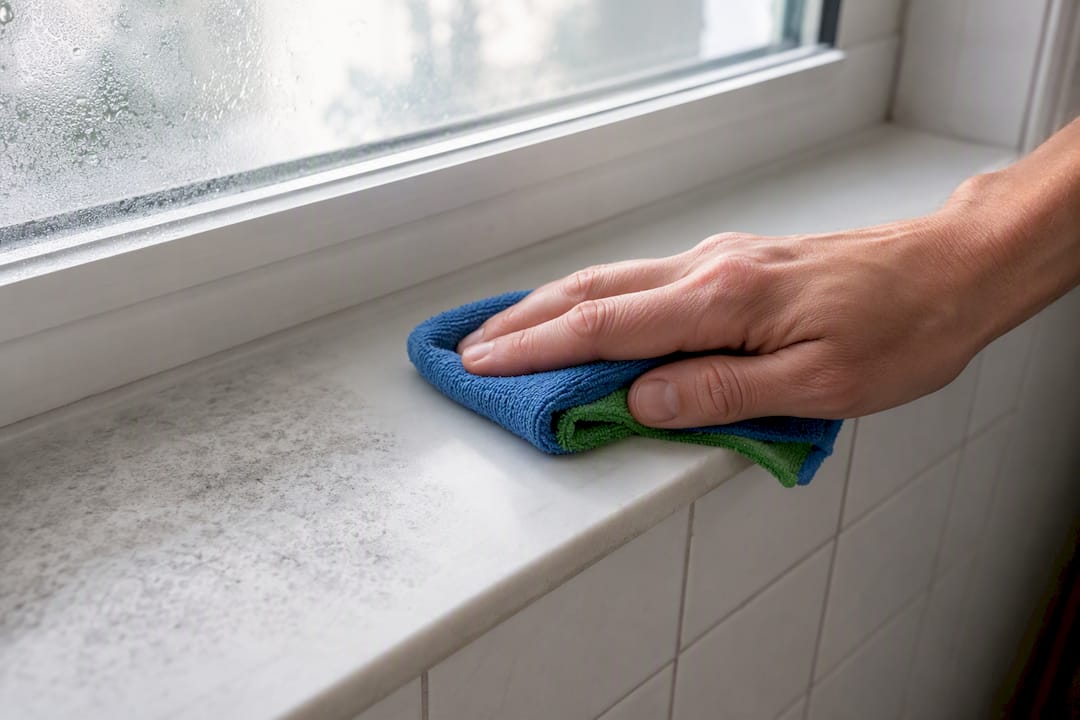
- Dampen a microfiber cloth and rub a small patch of the growth.
- If it lifts away cleanly and the surface dries clean, you're likely dealing with mildew.
- If it smears, leaves a stain, or the material feels soft or damaged underneath, treat it as invasive mold and inspect further.
This brush or wipe test is a practical, no-cost way to sort surface growth from something more serious, and it's the same first check Family Handyman recommends before homeowners do anything else.
Pro Tip: Keep a spare microfiber cloth under the sink just for this. A quick wipe test takes 30 seconds and saves you from either overreacting to harmless mildew or underestimating a real mold problem.
One caveat worth knowing: neither test tells you which species you're dealing with. That requires a lab swab. But species rarely changes your next move, which is almost always the same regardless of what's growing: cut off the moisture, and remove what you can't clean.
Where Does Mildew or Mold Typically Show Up in a Home?
Mildew sticks to predictable spots: shower grout, tile caulk, window sills that collect condensation, damp towels, and shower curtains. These are surfaces exposed to moisture that comes and goes rather than moisture that stays.
Mold prefers the opposite: constant, hidden dampness. That means the back side of drywall, under carpet padding, inside attic sheathing, in basements with chronic seepage, and anywhere a leak went unnoticed for more than a day or two.
The timeline matters more than most homeowners realize. Mold can begin colonizing damp material within 24 to 48 hours of water exposure, according to EPA guidance. That's a narrow window, and it's why a small leak ignored over a long weekend can turn into a real remediation job by the time anyone notices.
A few places worth checking that most people skip:
- Behind large furniture pushed against exterior walls
- Inside wall cavities near plumbing lines, even without a visible leak
- Under area rugs in rooms with poor airflow
- Attic insulation near roof penetrations or old leaks
If you keep smelling that musty odor but can't find the source, one of these hidden spots is usually where it's hiding. Hidden colonies behind furniture or inside wall voids near plumbing are common enough that the EPA specifically flags them as places surface cleaning alone won't fix.
Is Mildew Harmful, and Who Should Worry Most?
Indoor mold exposure, mildew included, is tied to allergy-like symptoms: sneezing, throat irritation, coughing, and worsened asthma symptoms in people who already have it. Harvard Health points out something a lot of homeowners get backward: color tells you almost nothing about danger. "Black mold" isn't automatically worse than green or white growth. What matters is exposure time and volume, not shade.
Health data point: Reviews of indoor air quality studies link damp, moldy homes to roughly 30 to 50 percent higher rates of several respiratory and asthma-related symptoms compared to dry homes.
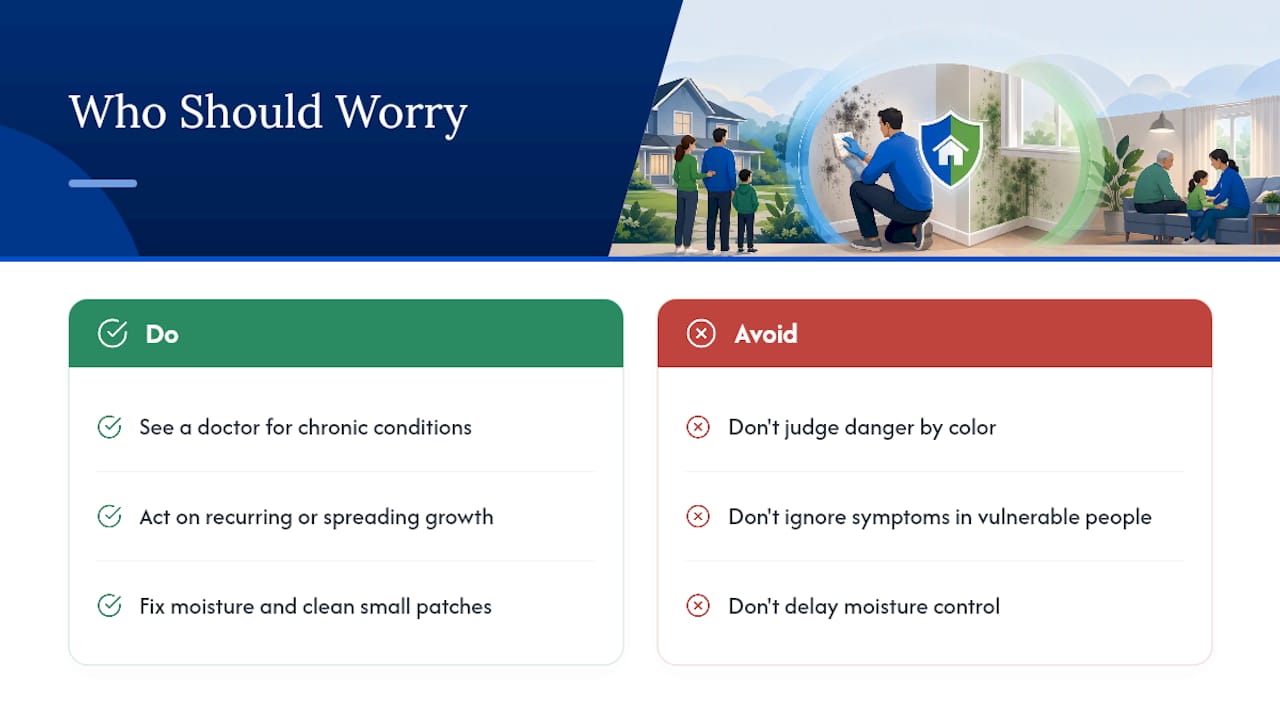
Some people carry more risk than others. Children, older adults, pregnant people, anyone with asthma, and people with weakened immune systems should treat visible growth more urgently, even when it looks minor. For everyone else, small, contained mildew on tile grout is a cleaning task, not a medical emergency.
Here's a simple way to split the decision: if someone in the house has a chronic respiratory condition and you're finding recurring or spreading growth, loop in a doctor about symptoms while you also deal with the source. If nobody's having symptoms and the patch is small, focus on cleanup and moisture control first.
Cleaning Mildew and Small Mold Patches Safely
Small stuff you can handle yourself. Here's the sequence that actually works:
- Put on an N95 mask or better, rubber gloves, and goggles before you start.
- Open a window or run an exhaust fan so you're not breathing concentrated spores in a closed bathroom.
- Scrub with a household detergent or 3% hydrogen peroxide on grout, tile, and other nonporous surfaces.
- Rinse and dry the area completely. Leftover dampness invites the same growth right back.
- Toss anything porous that's heavily contaminated, like moldy caulk or a stained shower curtain liner, rather than trying to save it.
Skip the bleach unless you're working on a hard, nonporous surface and you know exactly what you're treating. Routine bleach use on porous material like drywall or wood doesn't reach embedded roots, and the EPA specifically advises against relying on biocides as a default cleanup method. Never mix cleaning products, and never skip ventilation to save time.
Pro Tip: If you find yourself reaching for bleach on drywall or wood trim more than once on the same spot, that's your sign the growth is coming back because moisture never left, not because you didn't scrub hard enough.
Call a certified remediation professional when any of these apply: the affected area is larger than roughly 10 square feet, the material is porous and soaked (drywall, carpet padding, insulation), the growth followed a flood or major leak, it keeps coming back after cleaning, or someone in the home has a health vulnerability. A professional inspects, contains the area to stop spore spread, removes contaminated material, dries the space with monitoring equipment, and documents everything for insurance, something a DIY cleanup can't replicate.
How Do You Prevent Mildew and Mold From Coming Back?
Moisture control beats cleaning every time, because cleaning treats the symptom and moisture is the cause.
- Keep indoor relative humidity between 30 and 50 percent; a $10 to $50 hygrometer will tell you where you stand.
- Run a dehumidifier in basements or other consistently damp rooms.
- Dry any wet material, carpet, drywall, or furniture, within 24 to 48 hours of a leak or spill.
- Use exhaust fans in bathrooms and kitchens every time you shower or cook.
- Fix plumbing leaks and roof issues as soon as you spot them, not on a someday list.
- Check attics, crawl spaces, and behind large furniture every few months for early signs of dampness.
- Insulate cold exterior walls and pull furniture a few inches away from them to prevent condensation buildup.
None of this is complicated or expensive, and it works better than any cleaner on the market. EPA guidance on moisture strategies backs up this same combination: ventilation, dehumidification, and fixing the leak before it becomes a bigger job.
When It's Time to Call In a Certified Remediation Team
Once mold has soaked into drywall, spread past a small patch, or followed a flood, DIY cleaning stops being enough. That's the point where Purerestomd steps in. The team runs 24/7 emergency response with IICRC-certified technicians and a 30-minute response window designed to catch water damage before it turns into a full mold problem.
A certified team follows a process homeowners can't replicate with a bottle of peroxide: inspect the full extent of contamination, contain the area so spores don't spread to clean parts of the house, remove and discard contaminated material, dry the structure with monitoring equipment until moisture readings confirm it's safe, and document the whole process for insurance. Purerestomd also handles direct insurance billing, which cuts out a step most homeowners dread after a leak or flood.
If you're seeing recurring growth, dealing with mold after a flood, or just want a professional mold inspection to know exactly what you're facing, that's the point to make the call rather than keep scrubbing.
What Homeowners Get Wrong About Mildew vs Mold
Most advice on this topic treats mildew and mold like two separate enemies requiring two separate battle plans. That's backward. The research points to one real distinction that matters: surface growth you can wipe off versus growth that has penetrated material and needs removal, not just cleaning. Everything else, the color charts, the species names, the "which mold is worse" debates, is mostly noise for a homeowner standing in a bathroom trying to decide what to do next.
The bigger mistake is waiting to see if it gets worse. Mold can start colonizing damp material within 48 hours, so the "I'll deal with it this weekend" instinct is exactly what turns a five-minute wipe-down into a five-figure remediation job. Prioritize the wipe test and the moisture source over researching mold species. If the growth resists a simple clean, or the area is bigger than you can comfortably handle, get a professional opinion before you guess wrong.
— Pure
This article is general information, not a substitute for advice from a qualified doctor. Consult a qualified healthcare professional about your own circumstances before acting on anything here.
Sources
- What is the difference between mold and mildew? | US EPA
- Mold in the home: Identifying and treating the issue to prevent health problems | Harvard Health
- Is it mildew or mold? | Family Handyman
FAQ
Is Mildew a Type of Mold?
Yes. Mildew is a common name for certain surface-growing mold species. The practical difference is that mildew stays flat and powdery on the surface, while other mold types can penetrate porous materials.
Is Mildew Dangerous to Breathe?
Mildew and mold exposure can trigger allergy-like symptoms and worsen asthma, and prolonged exposure carries respiratory risks regardless of color, according to Harvard Health.
How Do I Know If It's Mold or Just Mildew?
Try a wipe test: dampen a cloth and rub the growth. If it lifts off cleanly, it's likely mildew; if it smears, stains, or the material underneath feels damaged, treat it as invasive mold.
How Fast Does Mold Grow After Water Damage?
Mold can begin colonizing wet material within 24 to 48 hours, which is why drying water-damaged areas quickly is the single most effective prevention step, per EPA guidance.
When Should I Call a Mold Remediation Professional?
Call a pro when the affected area exceeds roughly 10 square feet, when porous materials are soaked, after any flooding, when growth keeps returning, or when household members have asthma or other health vulnerabilities.