
Vacuum regularly with suction only, blot any spill immediately, and always test colorfastness before applying any liquid. Use a pH-neutral, WoolSafe-approved cleaner, avoid steam and dish soap, and dry the rug quickly. For antique, hand-knotted, or flood-soaked rugs, seek professional help to prevent damage.
TL;DR:
- Regular vacuuming with suction-only mode and rotating the rug every six to twelve months help extend its lifespan and prevent uneven wear.
- Spot-clean fresh stains promptly using a wool-safe, pH-neutral solution and avoid rubbing, which can damage fibers and set stains.
- Deep-cleaning a wool rug at home is safe only if the rug is modern, colorfast, and carefully tested; avoid hot water and steam to prevent felting and shrinking.
- Hire a professional for antique, heavily soiled, or flood-affected rugs to ensure controlled cleaning that prevents damage and mold growth.
- Complete drying within 24 to 48 hours with airflow and dehumidification is critical to avoid browning, mold, or odor issues after cleaning.
Table of Contents
- How Often Should You Vacuum a Wool Rug?
- How Do You Spot-Clean a Fresh Stain on a Wool Rug?
- Can You Deep-Clean a Wool Rug Yourself?
- When Should You Hire a Professional Rug Cleaner?
- How Long Should a Wool Rug Take to Dry?
- Why Do Stains Come Back or the Pile Feel Stiff After Cleaning?
- A Restoration Provider's Take on DIY Wool Rug Cleaning
- Get Professional Help for Wool Rugs That Need More Than a Spot Clean
- Where These Cleaning Standards Come From
- Sources
- FAQ
How Often Should You Vacuum a Wool Rug?
Wool fibers are tough, but they're not indestructible. Grit tracked in on shoes acts like sandpaper on the pile every time you walk across it, which is why regular vacuuming does more for a wool rug's lifespan than any deep clean ever will.
Regular vacuuming using suction-only mode or a raised beater bar is recommended, avoiding aggressive brush settings. It is also advisable to vacuum the rug's underside periodically to remove grit embedded in the backing.
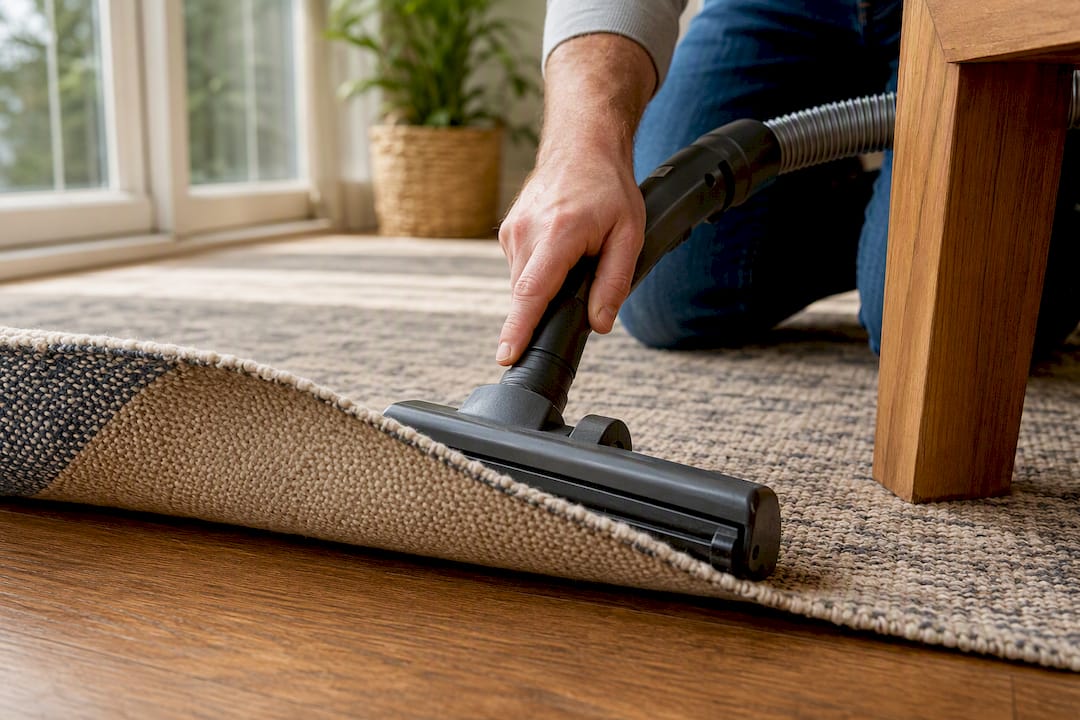
Rotate the rug every six to twelve months so sunlight and foot traffic wear it evenly instead of fading one section. A rug pad underneath does double duty: it stops the wool from sliding on hard floors and lets air move underneath, which cuts down on trapped moisture.
For upkeep beyond vacuuming, plan on:
- Occasional surface refreshes with dry powder or light foam treatments periodically throughout the year
- Professional hand washing every few years as needed
- More frequent professional cleaning in homes with pets, children, or heavy foot traffic
Pro Tip: Mark your rug rotation on your phone calendar the same day you change your smoke detector batteries. Two easy habits, one reminder.
How Do You Spot-Clean a Fresh Stain on a Wool Rug?
Wine, coffee, mud, or a pet accident on a wool rug isn't a crisis if you act in the first few minutes. Speed matters more than product here.
- Scoop and blot first. Lift solids with a spoon, then press a clean white cloth or paper towel straight down on the spill. Never rub. Rubbing pushes the stain deeper into the pile and can distort the fibers.
- Work edge to center. Blot from the outer edge of the stain inward so you're not spreading it wider across clean wool.
- Test colorfastness first. Dab a hidden corner or the fringe with your cleaning solution and a white cloth. If any color transfers onto the cloth, stop immediately and hold off on any wet cleaning.
- Mix a wool-safe solution. Use cool water with a small amount of pH-neutral, WoolSafe-approved cleaner. WoolSafe's own testing standards call for products between 5.5 and 8.0 pH, since anything more alkaline strips the natural lanolin that keeps wool fibers flexible.
- Apply, blot, rinse light, blot-dry. Dab the solution on, blot again, follow with a barely-damp cloth to rinse, then blot until the area feels only faintly damp.
If the stain lightens but doesn't fully lift after two passes, stop. Repeated wetting risks browning and fiber damage, and that's your cue to call a specialist rather than keep working the spot.
Can You Deep-Clean a Wool Rug Yourself?
Some wool rugs handle a home deep clean fine. Others don't, and knowing which is which starts before you touch a single cleaner. Check the care label if there is one, and consider the dye and construction. Older, hand-dyed, or hand-knotted rugs are far more likely to bleed or shrink under wet cleaning than a modern machine-made wool rug with stable synthetic dyes.
If your rug passes that check, here's a safe sequence:
- Vacuum thoroughly, both sides, to remove loose soil before any liquid goes near it.
- Test colorfastness in an inconspicuous spot, same as with spot cleaning.
- Work in small sections, roughly one square foot at a time, rather than soaking the whole rug at once.
- Rinse minimally. Use just enough cool water to lift the cleaning solution. More water means more drying time and more risk.
- Blot and extract moisture with towels or a wet/dry vacuum before the rug ever leaves the room.
- Dry both sides completely before returning the rug to use.
Skip steam cleaners, hot water, and rented hot-water extraction machines entirely. Wool felts and shrinks under heat, and industry guidance is consistent that heat and excessive moisture cause felting, shrinkage, and dye migration that no amount of careful blotting can undo afterward.
Pro Tip: If you're not sure a rug can handle wet cleaning, try a dry cleaning powder made for wool first. It lifts surface soil without introducing any moisture at all.
When Should You Hire a Professional Rug Cleaner?
Some jobs are outside the range of what a bucket and a soft cloth can safely fix. Call in a professional when:
- The rug is antique, hand-knotted, or of uncertain dye stability
- A large portion of the rug is heavily soiled or stained
- Moisture penetration has affected the backing
- Persistent odors remain after cleaning efforts
- The rug has experienced flooding or signs of mold growth
The IICRC S100 standard actually recommends taking area rugs off-site to an in-plant facility whenever possible, because cleaning a rug in place on your floor risks poor rinsing, slow drying, and damage to the flooring underneath. In-plant hand-wash uses controlled cold-water immersion and chemistry matched to the specific rug, a level of control most home setups simply can't match.
When you're vetting a company, ask about IICRC certification specifically for Rug Cleaning Technician training, and confirm they use WoolSafe-approved products rather than generic carpet shampoo.
Pro Tip: Ask a prospective cleaner how they test colorfastness before they start. A vague answer is a red flag.
How Long Should a Wool Rug Take to Dry?
Drying is where a lot of home cleaning attempts go wrong, not the washing itself. Push moisture out fast with clean towels, prop the rug up on its edge or over a rack for airflow, and point a fan or two at both sides. A dehumidifier in the room speeds things up considerably.
Aim to have both sides of the rug fully dry within 24 to 48 hours. Beyond that window, you're inviting trouble:
- Slow-drying wool can develop browning, a yellowish discoloration from cellulosic residue reacting with lingering moisture
- Damp wool left too long is a setup for mold growth and musty odor, since materials that stay wet feed exactly the kind of growth indoor air guidance warns against
- If the odor persists after the rug is fully dry, that's usually residue or early mold, not a smell that will fade on its own
If a rug has been through actual flooding rather than a spill, isolate it from the rest of the house, photograph the damage for your insurance claim, and treat it as a job for emergency water damage restoration rather than a weekend DIY project.
Why Do Stains Come Back or the Pile Feel Stiff After Cleaning?
A stain that reappears a few days after cleaning almost always means leftover detergent residue attracting dirt, not a stain that was never really gone. Check by pressing a damp white cloth on the spot. If it picks up soap residue, re-rinse that small area with plain cool water and blot dry again.
A few other common issues:
- Dye bleeding onto adjacent colors or odors that won't quit are signs to stop and call a professional, not to keep scrubbing
- Stiff or fuzzy pile after cleaning usually responds to gentle grooming with a soft rug brush, worked in the direction of the nap
- Any sign of mold, mildew smell, or discoloration spreading after drying means it's time to escalate to mold remediation rather than another round of home cleaning
A Restoration Provider's Take on DIY Wool Rug Cleaning
We've pulled enough soaked, moldy, or badly over-wetted rugs out of basements to know where the line sits. Our IICRC-certified technicians handle saturated and flooded rugs regularly, and in-plant restoration exists precisely because cold immersion and matched chemistry protect dye and fiber in ways a garage hose job can't. DIY is genuinely fine for small, colorfast spots. It stops being fine the moment water has soaked through the backing or the rug is old enough that nobody's sure how it was dyed.
— Pure
Get Professional Help for Wool Rugs That Need More Than a Spot Clean
There's a real difference between blotting out a coffee spill and rescuing a wool rug that's been sitting in two inches of basement water. Pure Resto handles both ends of that spectrum with IICRC-certified technicians, in-plant hand-washing for delicate wool pieces, and rapid emergency drying when a flood or burst pipe puts your rug and your flooring at risk. Direct insurance billing takes one more headache off your plate when a water event is involved.
When you request an estimate, have the rug's approximate size, a photo of the affected area, and a short description of what happened, whether that's a wine spill or a flooded basement. That's enough for our team to tell you fast whether it's a job for a home fix or a call for a technician. If you're in the Maryland area and dealing with a rug that's soaked, moldy, or just past what a spot clean can handle, request a carpet cleaning estimate and we'll get you a response quickly.
Where These Cleaning Standards Come From
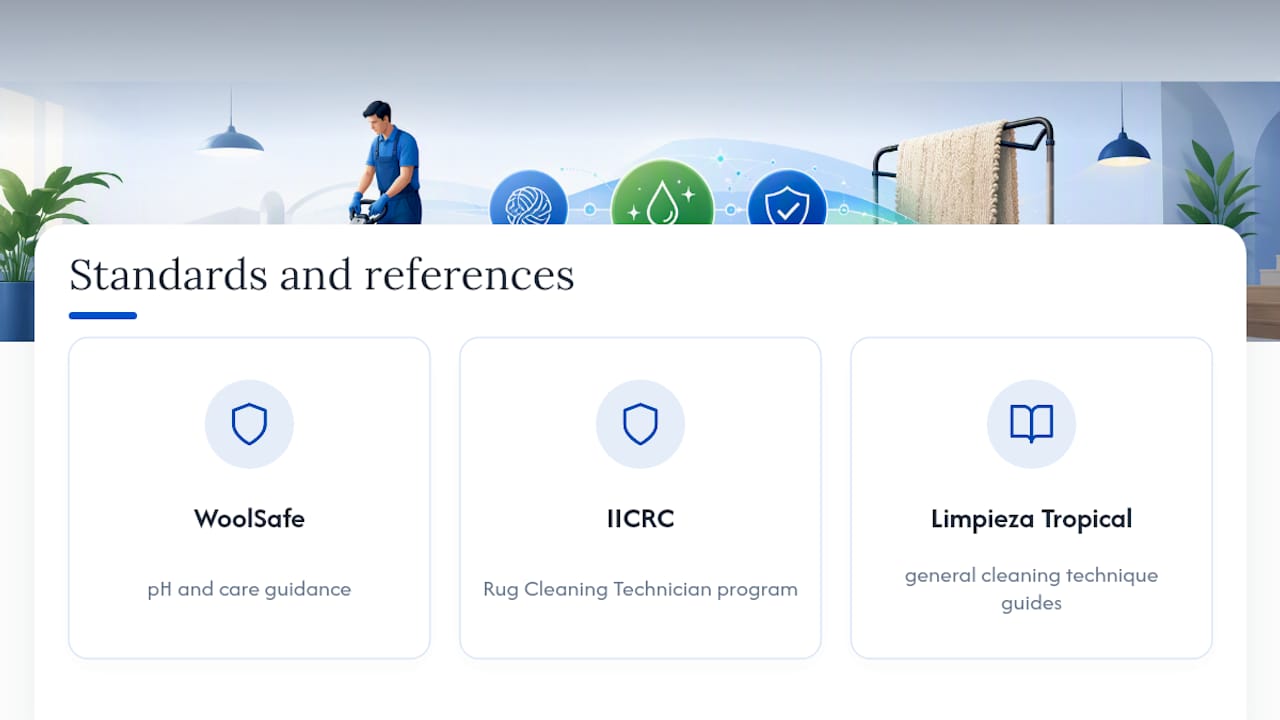
WoolSafe's pH and care guidance and IICRC's Rug Cleaning Technician program set the technical standards behind this article's advice. For general cleaning technique reference, see Limpieza Tropical's cleaning guides.
Sources
FAQ
What Is the Best Way to Clean a Wool Rug?
Vacuum regularly with suction only, blot spills immediately instead of rubbing, and use a cool-water, pH-neutral solution between 5.5 and 8.0 after testing for colorfastness. For anything beyond light surface soil, a professional in-plant hand wash protects the wool far better than a home wet-clean attempt.
How Much Does It Cost to Have an 8x10 Wool Rug Cleaned?
Pricing varies by region, rug condition, and whether the rug needs pickup and in-plant hand-washing versus an on-site refresh, so it's not publicly listed as a flat rate. Request a quote based on your rug's size, condition, and any staining so you get an accurate number.
Should Wool Rugs Be Professionally Cleaned?
For antique, hand-knotted, or heavily soiled rugs, yes. The IICRC S100 standard recommends in-plant cleaning for area rugs whenever possible, since it allows controlled immersion, matched chemistry, and forced-air drying that home methods can't replicate.
Can I Take a Wool Rug to the Dry Cleaners?
Some dry cleaners handle rugs, but a standard clothing dry cleaner isn't the same as a specialist trained in rug construction and wool chemistry. Look for a cleaner with IICRC Rug Cleaning Technician certification rather than assuming any dry cleaner can safely handle a wool area rug.