
Shut off the water first. That's the single action that determines whether you're dealing with a minor cleanup or a major restoration job. Find the isolation valve behind or beside the toilet base, turn it clockwise until it stops, and the flow stops with it. If the valve won't budge, lift the tank lid and pull up the float ball or press the rubber flapper down against the drain seat. Either move cuts off water entering the bowl immediately. When none of those work, shut off the house main.
Once the water stops:
- Keep everyone, including pets and children, out of the affected area.
- Do not flush again, no matter how tempting.
- Lay towels or folded blankets across thresholds to slow water from spreading to adjacent rooms.
- Remove rugs, bath mats, and any porous items from the wet zone.
Pro Tip: Exercise your isolation valve every six months. Turn it off and back on. A valve that hasn't moved in years seizes up exactly when you need it most.
Key Takeaways
Shutting off the water supply immediately and containing the spread are the two actions that most reduce both health risk and restoration cost after a toilet overflow.
| Point | Details |
|---|---|
| Stop water first | Turn the isolation valve clockwise; if it fails, lift the tank float or press the flapper. |
| Don't flush again | One flush adds roughly 1.6 gallons and can turn a minor spill into subfloor damage. |
| Disinfect correctly | Apply an EPA-registered disinfectant and hold the full wet contact time listed on the label. |
| Call pros for sewage or hidden moisture | Category 3 water and moisture under flooring require professional extraction; mold begins within 24–48 hours. |
| Purerestomd for Maryland emergencies | 30-minute response, IICRC-certified crews, and direct insurance billing for water damage and sewage cleanup. |
Table of Contents
- What to do in the first five minutes of a toilet overflow
- How do you clear a toilet clog safely?
- Is an overflowing toilet a biohazard?
- How to clean, disinfect, and dry after a toilet overflow
- When should you call a plumber or restoration company?
- What Purerestomd offers for emergency water damage in Maryland
- What does toilet overflow restoration cost, and how long does it take?
- What restoration technicians wish homeowners knew
- Purerestomd is ready when the situation is beyond DIY
- Sources
- FAQ
What to do in the first five minutes of a toilet overflow
Speed matters more than perfection here. Follow this sequence and you'll limit both the water damage and the health risk.
- Stop the water using the isolation valve, float, or flapper as described above. If water is near any electrical outlet or baseboard heater, shut off that circuit at the breaker panel before stepping into standing water.
- Don't flush again. A single flush adds roughly 1.6 gallons of water to an already-overflowing bowl and can turn a small spill into a soaked subfloor.
- Put on gloves before touching anything wet. Even a "clean water" overflow from a toilet tank carries bacteria from surfaces and the bowl rim.
- Contain the spread. Block doorways with rolled towels. Move rugs, laundry baskets, and anything porous off the wet floor.
- Remove standing water fast. Use a mop, old towels, or a wet/dry vacuum if you have one. A bucket works for deeper puddles. The goal is to get water off the floor within the first 15–20 minutes.
- Open windows and run the bathroom exhaust fan to start drying the air immediately.
Safety note: Never use electrical appliances, including a wet/dry vac, while standing in water. Dry the floor around the outlet first, or use a battery-powered unit.
How do you clear a toilet clog safely?
Once the water is contained, you can try to fix the underlying clog. Most clogs clear with the right tool and technique, no chemicals needed.
Start with a flange plunger. A flange plunger has a rubber extension that folds out from the cup and seats inside the drain opening, creating a real seal. A flat cup plunger won't work on a toilet drain.
- Add enough water to the bowl to cover the plunger cup if the bowl is nearly empty.
- Seat the flange firmly in the drain opening.
- Push down slowly to expel air, then pull back sharply. Repeat with steady, rhythmic strokes for 15–20 seconds.
- Check whether water drains. If it does, pour a bucket of water in slowly to confirm the clog is clear before turning the supply valve back on.
If plunging fails, use a toilet auger. Feed the cable end into the drain, rotating the handle clockwise as you push. Stop immediately if you hit solid resistance. Forcing the cable can scratch porcelain or push the obstruction deeper. Most clogs clear with a proper flange plunger; if plunging fails, a toilet auger is the next reasonable step, but hard resistance means it's time to call a plumber.
What to avoid entirely:
- Chemical drain cleaners. They're largely ineffective on toilet obstructions and can damage plumbing and porcelain while creating a caustic splash hazard.
- Boiling water, which can crack porcelain.
- Wire hangers or improvised tools that scratch the bowl or pack the clog tighter.
Pro Tip: When you turn the supply valve back on, do it slowly and keep the tank lid off. Watch the bowl as it refills. If water rises toward the rim again, shut it off immediately and call a plumber.
Is an overflowing toilet a biohazard?
It depends entirely on what came out. Water damage restoration professionals use a three-category system to classify contamination, and the category determines how you respond.
- Category 1 (clean water): Water from the supply line or tank overflow tube. Lowest health risk. Standard cleanup with gloves and a disinfectant is appropriate.
- Category 2 (gray water): Water that has contacted the bowl but contains no visible solid waste. Carries bacteria and should be treated as potentially harmful. Wear gloves and eye protection; discard soft goods that absorbed it.
- Category 3 (black water/sewage): Water with visible waste, dark color, or a foul odor, or any backup from a floor drain or main sewer line. This is a biohazard that generally requires professional remediation. Pathogens including E. coli, hepatitis A, and norovirus can be present. Aerosolization during cleanup increases inhalation risk.
PPE by category:
- Category 1: Nitrile gloves minimum.
- Category 2: Nitrile gloves plus eye protection; N95 mask if scrubbing vigorously.
- Category 3: Full nitrile gloves, eye protection, N95 respirator, and disposable clothing or coveralls. Bag and seal everything used in cleanup.
Mold compounds the risk. Spores can begin colonizing wet building materials within 24–48 hours, so the window for effective DIY drying is short.
How to clean, disinfect, and dry after a toilet overflow
Cleaning and disinfecting are two separate steps. Skipping the first makes the second nearly useless.
- Remove solids with paper towels or disposable cloths. Bag and seal them immediately.
- Absorb standing water with a mop or wet/dry vac.
- Wash all affected surfaces with warm water and dish detergent. Scrub grout lines, baseboards, and the toilet base.
- Apply an EPA-registered disinfectant. Spray or wipe it on and let it stay wet for the full contact time listed on the label. Disinfectants only work when they remain wet on the surface for the labeled contact time, not when sprayed and immediately wiped dry. A common bleach solution (follow CDC label guidance for dilution) works on hard, non-porous surfaces.
- Dry thoroughly. Run fans, open windows, and use a dehumidifier if you have one. Target the floor, baseboards, and the wall behind the toilet.
For porous items contaminated by sewage, the decision is usually discard or professional cleaning. Rugs, bath mats, and drywall that absorbed Category 3 water rarely clean safely at home. Washable items from a Category 1 spill can go through a hot-water laundry cycle with detergent.
If water reached under the flooring or inside a wall cavity, surface drying won't reach it. Mold will start there within 24–48 hours without professional extraction equipment.
When should you call a plumber or restoration company?
Some situations are simply outside DIY territory. Here's when to stop and call.
Call a licensed plumber when:
- Multiple fixtures (sink, tub, another toilet) are backing up at the same time, which signals a main sewer or vent stack problem.
- The clog doesn't clear after proper plunging and augering.
- You suspect a septic system backup.
- The toilet rocks or the floor feels soft around the base, suggesting a broken flange or subfloor damage.
Call a restoration company when:
- The overflow involved visible sewage (Category 3).
- Water soaked into subflooring, wall cavities, or reached a ceiling below.
- Porous contents (furniture, drywall, carpet padding) were contaminated.
- You see or smell mold beginning within 24–48 hours of the event.
What restoration pros bring that you can't replicate at home:
- Containment barriers to prevent cross-contamination.
- Truck-mounted extraction and structural drying equipment.
- Antimicrobial treatments applied after extraction.
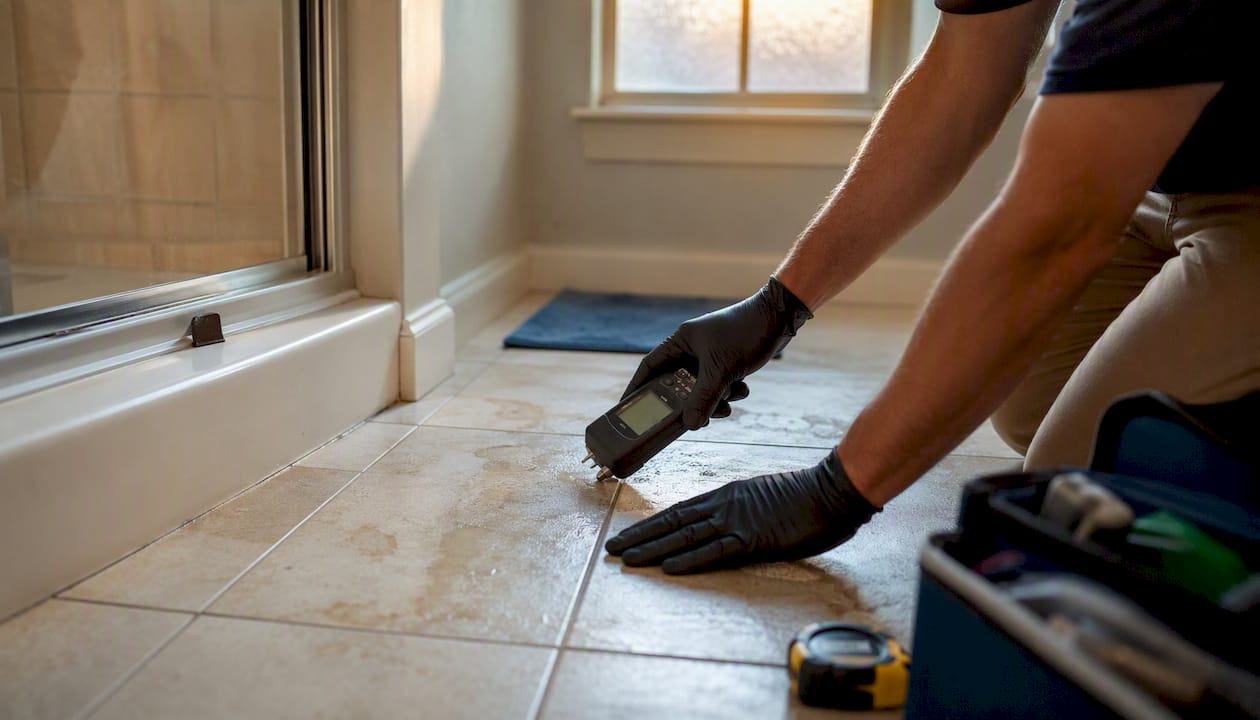
- Moisture mapping to find hidden wet zones.
- Contents pack-out and secure storage for contaminated belongings.
- IICRC-certified technicians trained in sewage remediation protocols.
- Direct insurance billing so you're not fronting the cost.
Pro Tip: Ask any restoration company you call whether they are IICRC-certified. The Institute of Inspection, Cleaning and Restoration Certification sets the industry standard for water damage and sewage remediation. Certification means the technicians follow documented protocols, not guesswork.
What Purerestomd offers for emergency water damage in Maryland
Purerestomd operates 24/7 across Maryland with a 30-minute emergency response time, specifically because the difference between a contained spill and a mold-infested subfloor is often measured in hours, not days.
Services available immediately after a toilet overflow or sewage backup:
- Emergency water extraction and structural drying.
- Sewage removal and antimicrobial treatment.
- Mold inspection and remediation when moisture has been present long enough.
- Carpet and upholstery cleaning for affected floor coverings.
- Contents cleaning, pack-out, and secure storage for contaminated belongings.
Every team is IICRC-certified and arrives with advanced drying and moisture-mapping equipment. Purerestomd handles direct insurance billing, which means you describe the damage, they document it, and your insurer gets the claim directly.
What does toilet overflow restoration cost, and how long does it take?
Costs vary widely based on contamination category, materials affected, and how quickly mitigation starts.
- DIY cleanup (Category 1, hard surfaces only): Primarily your time plus the cost of disinfectant and disposable supplies. Minimal out-of-pocket expense.
- Professional mitigation (Category 2 or 3, limited spread): Ranges from a few hundred dollars for extraction and antimicrobial treatment to over a thousand depending on square footage and materials. Regional rates vary.
- Full restoration (structural drying, subfloor replacement, drywall repair): Can reach several thousand dollars when water has penetrated building materials. Homeowners insurance often covers sudden and accidental overflow, but not gradual leaks or negligence.
Timeline expectations:
- Immediate mitigation: completed within hours of arrival.
- Structural drying: typically 24–72 hours with professional equipment, longer for thick concrete or dense materials.
- Full restoration (repairs, replacement): days to weeks depending on scope.
Insurance documentation tips:
- Photograph everything before touching it: the toilet, the floor, affected walls, and any damaged belongings.
- Save damaged items rather than discarding them until an adjuster has seen them.
- Keep receipts for any emergency purchases (fans, dehumidifiers, cleaning supplies).
- Ask your restoration company about direct billing and whether mitigation costs are covered separately from repairs.
Request emergency dispatch for active water, sewage, or any situation where mold risk is immediate. Schedule non-urgent remediation (a contained, already-dry spill with no structural concern) as a standard appointment.
What restoration technicians wish homeowners knew
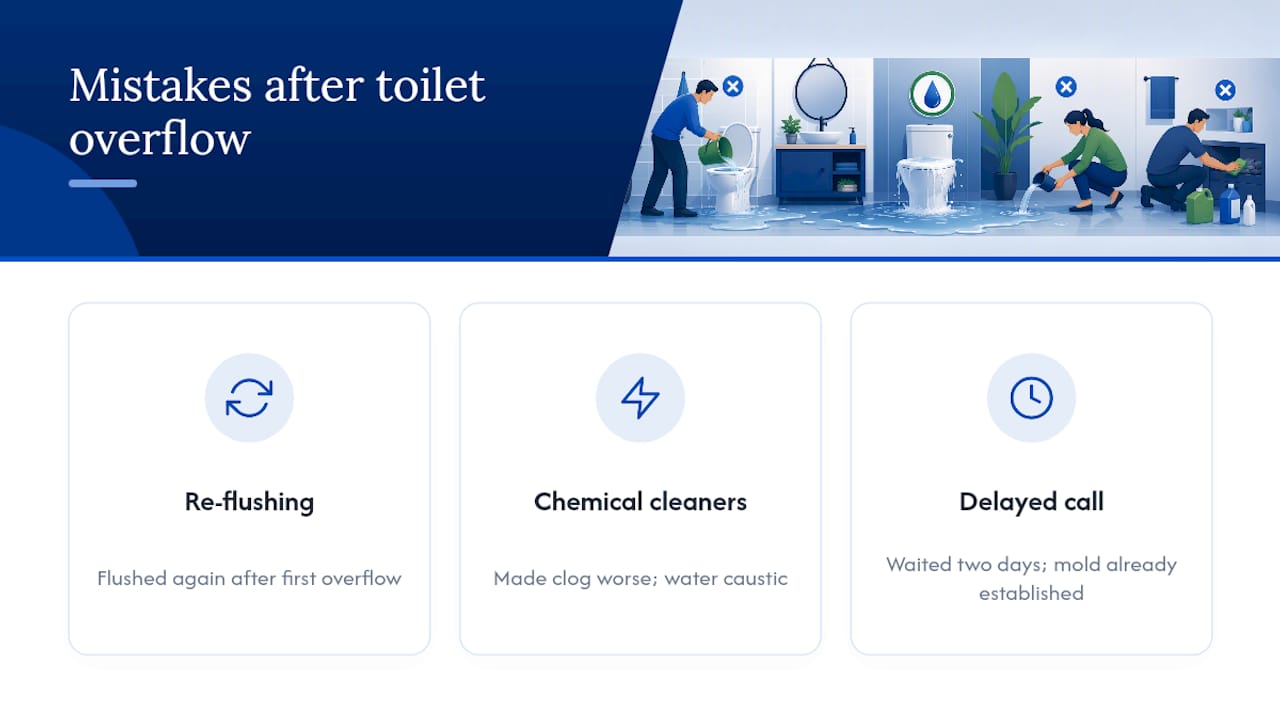
The calls that turn into expensive jobs almost always share one of three mistakes: the homeowner flushed again after the first overflow, used a chemical drain cleaner that made the clog worse and the water caustic, or waited two days to call because the floor "looked dry."
Floors look dry long before they are dry. Water moves laterally under vinyl and tile, soaks into wood subfloor, and wicks up drywall. By the time you see a stain or smell mildew, the mold colony is already established.
Simple maintenance prevents most of these calls. Exercise your shutoff valve twice a year. Replace the flapper and fill valve every three to five years; they're inexpensive and a failing flapper is one of the most common causes of overflow. Never flush "flushable" wipes, cotton balls, paper towels, or anything that isn't toilet paper or human waste.
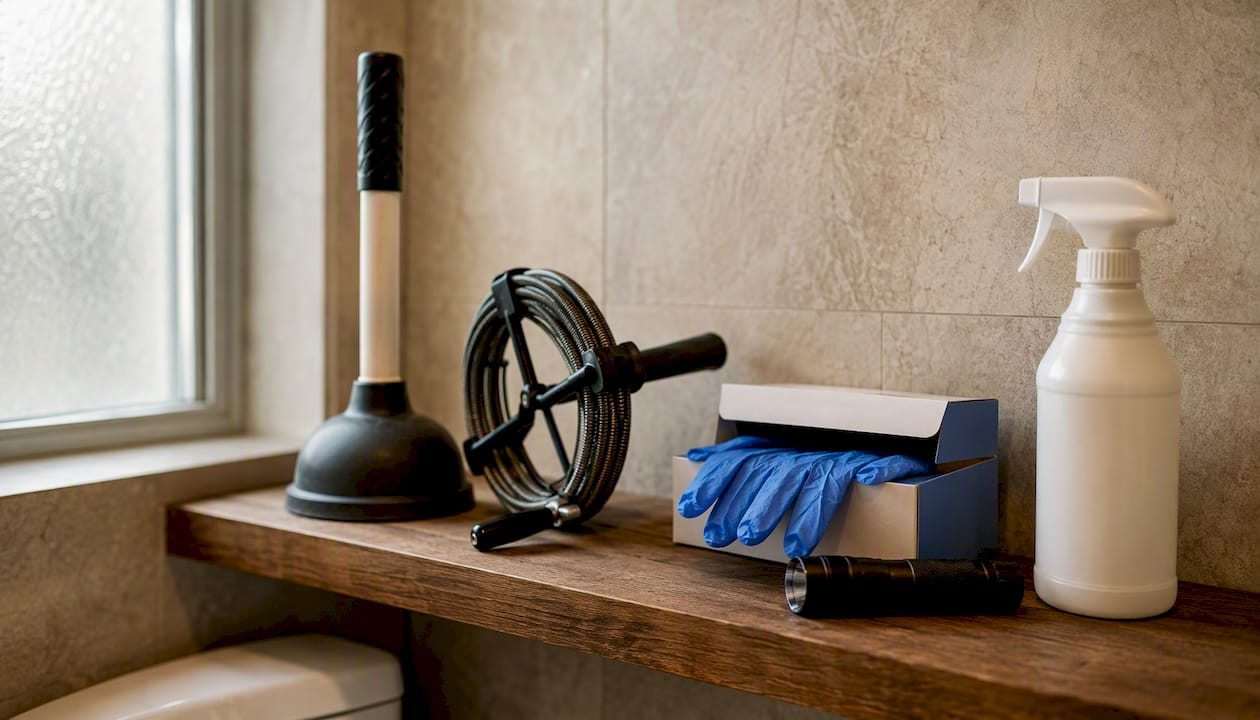
Keep a labeled emergency bin in or near the bathroom: a flange plunger, a toilet auger, a box of nitrile gloves, a small flashlight, and a bottle of EPA-registered disinfectant. That kit handles the majority of minor overflow situations before they escalate.
Purerestomd is ready when the situation is beyond DIY
When the water is dark, the smell is unmistakable, or you've lifted the flooring and found wet subfloor underneath, the cleanup has moved past what a mop and a bottle of bleach can handle safely.
Purerestomd responds across Maryland within 30 minutes, 24 hours a day, with IICRC-certified crews, truck-mounted extraction equipment, and direct insurance billing. You don't need to figure out the paperwork while managing a sewage backup. Describe the situation, give your address, and the team arrives ready to contain, extract, treat, and dry, with documentation your insurer needs already in hand.
Call Purerestomd or request emergency service online now. The sooner mitigation starts, the smaller the restoration bill.
Sources
- Toilet Overflowing? How to Stop & Prevent
- CDC
- How to Clean Up After Toilet Overflows: Fast, Safe Steps - CleaningBro
- Toilet overflowing: what to do
This article is general information, not a substitute for advice from a qualified doctor. Consult a qualified healthcare professional about your own circumstances before acting on anything here.
FAQ
Is an overflowing toilet a biohazard?
It depends on the water source. Clean water from the tank is low risk, but any overflow containing visible waste or originating from a sewer backup is a Category 3 biohazard and requires professional remediation.
Will a toilet overflow cause mold?
Yes, if building materials stay wet. Mold can begin growing within 24–48 hours where water has soaked into subfloor, drywall, or wall cavities, so fast extraction and drying are critical.
Can you put bleach in a toilet overflow tube?
The overflow tube inside the tank is not a drain for cleaning products. Follow CDC dilution guidance and apply bleach solution to hard, non-porous surfaces during cleanup, not into the tank's overflow tube.
Is it safe to pour vinegar into the toilet's overflow tube?
Vinegar poured into the tank's overflow tube reaches the bowl and won't clear a clog or disinfect a contaminated floor. Use a flange plunger for clogs and an EPA-registered disinfectant on affected surfaces instead.