

If you're searching "mold test Potomac MD," here's the direct answer: call Pure Resto for a professional inspection before you do anything else. Mold can start growing within 24 to 48 hours of a moisture event, so waiting even a few days after a leak or flood lets a small problem become a remediation job.
Here's what happens once you call:
- A technician schedules your inspection, often the same day
- You get a written scope before any sampling begins
- Lab-backed air and surface samples go out for third-party analysis
- You receive a report with clear next steps, not just a sales pitch
Pure Resto is IICRC-certified, offers a 30-minute emergency response window, and bills most insurance carriers directly — three things worth confirming with any provider you're considering.
Key Takeaways
A fast, lab-backed mold inspection from an IICRC-certified provider like Pure Resto is the most reliable way for Potomac homeowners to confirm contamination and stop it from spreading.
| Point | Details |
|---|---|
| Act within 48 hours | Mold can begin growing 24 to 48 hours after a moisture event, so schedule an inspection immediately. |
| Demand lab-backed results | Insist on third-party lab analysis over in-house visual-only assessments for accurate species and spore data. |
| Separate inspection from remediation | Avoid providers who upsell remediation during a free inspection visit with no written scope. |
| Get an itemized quote | A transparent quote lists sample count, lab partner, turnaround time, and clearance testing. |
| Choose one accountable provider | Pure Resto offers inspection, remediation, and direct insurance billing under one IICRC-certified team with a 30-minute response window. |
Table of Contents
- Mold Testing Services MD: What Pure Resto Offers Potomac Homes
- What Does a Professional Mold Inspection Involve?
- How Much Does a Mold Test Cost in Maryland?
- How Do You Choose a Mold Testing Provider in Potomac?
- How Fast Does Mold Grow After Water Damage?
- What Happens During an On-Site Mold Inspection?
- Are DIY Mold Test Kits Reliable Enough?
- How Does Mold Remediation Insurance Billing Work?
- A Potomac Case Snapshot: Inspection to Clearance
- What Actually Matters Most in This Process
- Get a Rapid, Lab-Backed Mold Inspection From Pure Resto
- Sources
- FAQ
Mold Testing Services MD: What Pure Resto Offers Potomac Homes
Pure Resto runs a full-service model for Potomac homeowners: 24/7 emergency water damage response, mold inspection, lab-backed testing, remediation, and contents cleaning, all under one roof with direct insurance billing. That matters more than it sounds, because a fragmented process (one company inspects, another remediates, a third cleans your carpets) creates gaps where nobody's accountable for the outcome.
The trust signals worth checking are:
- IICRC certification for technicians handling both inspection and remediation
- A stated rapid response time (Pure Resto advertises 30 minutes)
- Third-party lab analysis rather than in-house "guesswork" results
- Documented before-and-after evidence and written clearance reports
- Verified customer reviews you can actually read, not just claims on a homepage
Potomac's housing stock adds wrinkles that generic mold companies sometimes miss. Large estates, waterfront lots, and expansive crawl spaces trap humidity differently than a typical townhouse, and older custom homes often hide moisture behind finished walls that a quick walk-through won't catch.
Pro Tip: Ask any provider whether they use thermal imaging alongside a moisture meter. A visual scan alone can miss trapped moisture in attic decking or wall cavities, which is common in Potomac's older, larger homes.
What Does a Professional Mold Inspection Involve?
A real inspection follows a sequence, not a single walk-through with a flashlight. Here's the typical order:
- Intake and history. The inspector asks about past leaks, water events, HVAC issues, and any musty odors or health symptoms in the household.
- Visual inspection. Technicians check visible surfaces, behind appliances, under sinks, and in crawl spaces for staining, discoloration, or active growth.
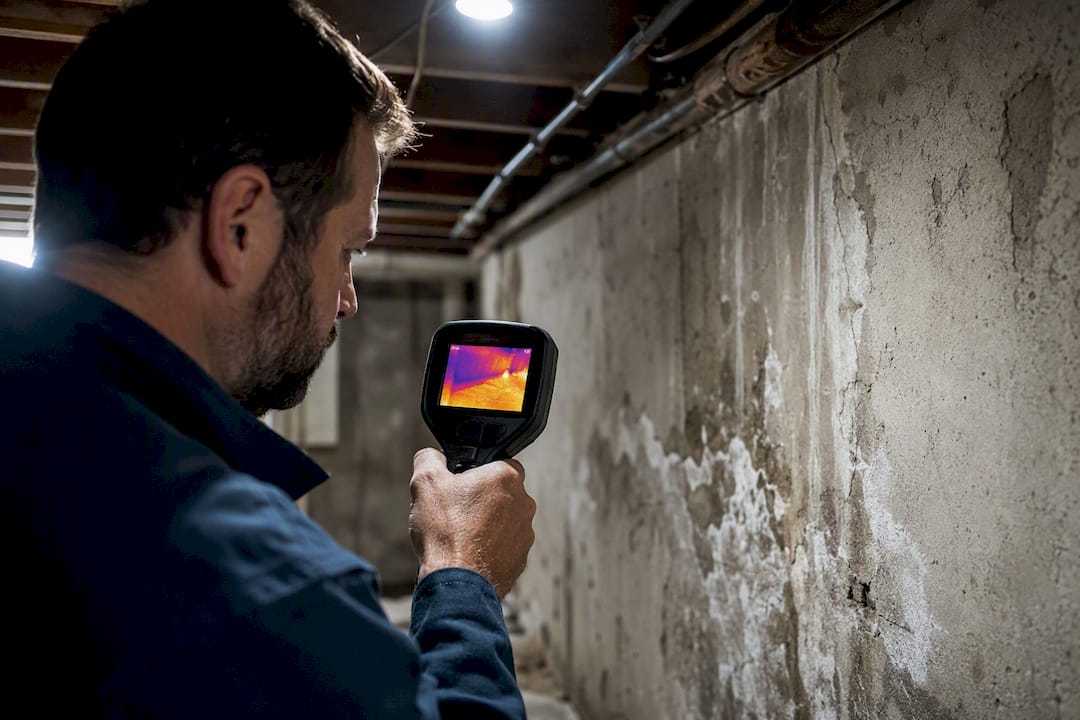
- Moisture mapping. Using thermal imaging combined with pin-style hygrometry, inspectors locate hidden moisture in wall cavities, attic decking, and HVAC components that a visual check alone would miss.
- Sample collection. Depending on findings, the team collects air samples, surface swabs, tape-lifts, bulk material, or HVAC dust, matched to what the visual and moisture data suggest.
- Lab analysis. Samples go to an accredited third-party lab, not an in-house test kit, for species identification and spore-count comparisons against outdoor baseline air.
- Written report. You get documented findings, sample locations, lab results, and a remediation scope if one's needed.
The lab report typically shows two things: what type of mold is present (species identification) and how concentrated it is relative to a normal outdoor air sample. That distinction drives the remediation scope. A minor localized finding might need spot treatment, while elevated spore counts across multiple rooms point to a broader containment job.
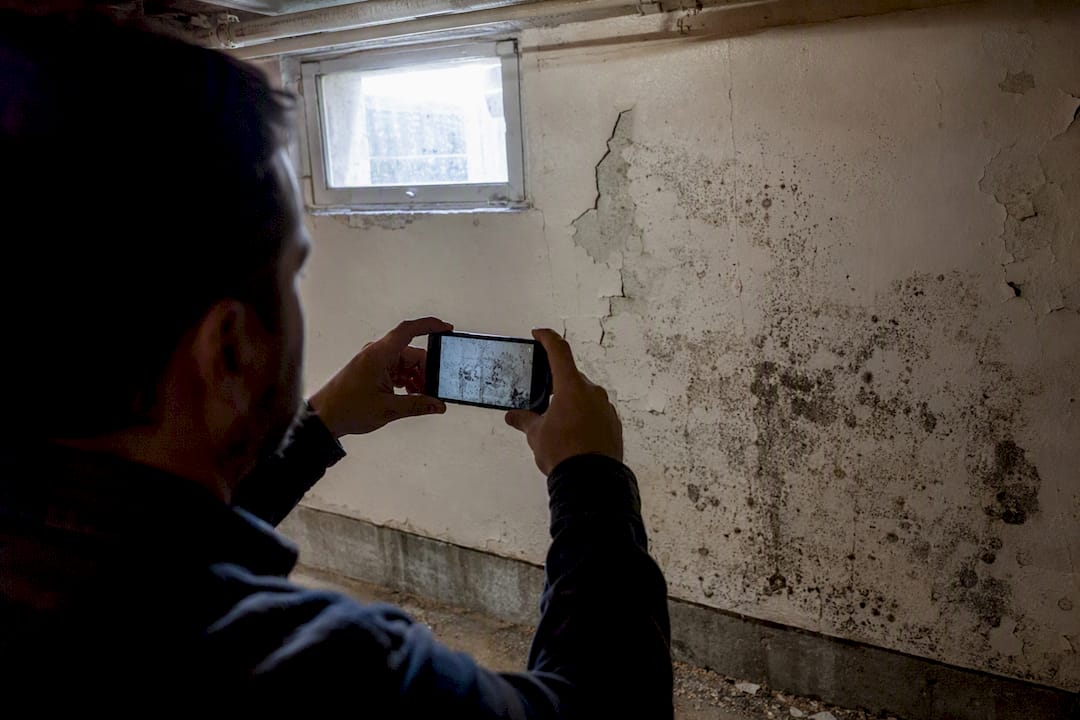
Pro Tip: Before the inspector arrives, take photos of any visible staining, water intrusion history, or musty areas, and note when you first noticed the smell or the leak. That timeline helps both the inspection and, later, your insurance claim.
How Much Does a Mold Test Cost in Maryland?
Costs vary based on test type, property size, and how many samples the situation calls for. Understanding the options helps you evaluate a quote instead of just accepting the first number you hear.
Common test types:
- Air sampling with lab analysis — measures spore concentration in indoor air versus an outdoor control sample; the standard choice for general air quality concerns.
- Surface swabs and tape-lifts — identify what's growing on a specific visible surface, useful for confirming a suspected patch before remediation.
- Bulk sampling — a physical piece of material (drywall, insulation) sent to the lab, typically used when contamination is deep or extensive.
- ERMI/HERTSMI dust testing — DNA-based dust analysis that screens a whole home, often requested for health-sensitive occupants.
- HVAC testing — checks whether ductwork is circulating spores throughout the house, critical if central air is involved.
What drives the price on any given job:
- Property size and number of rooms requiring sampling
- Total number of samples collected (each one carries its own lab fee)
- Lab turnaround time, with rush results costing more
- Whether it's a targeted test (one suspected area) or a full-property screening
- Emergency or same-day scheduling versus a standard appointment window
A transparent quote should itemize the sample count, name the lab partner doing the analysis, state the turnaround time, and specify whether clearance testing after remediation is included. If a quote just says "mold inspection, flat fee" with no breakdown, ask what's actually included before you sign anything.
One more thing worth understanding: per-sample lab fees can look expensive next to a flat "visual inspection" price, but a visual-only inspection can't tell you species or concentration. If you're making a real decision, whether that's a remediation plan or a real estate negotiation, lab-backed data is what actually holds up.
How Do You Choose a Mold Testing Provider in Potomac?
The single biggest red flag in this industry is a company that inspects your home for free and then quotes you thousands in remediation on the spot. That's not a mold test, it's a sales funnel. A trustworthy provider separates the two, or at minimum documents findings with photos and lab data before recommending work.
Confirm these before booking:
- IICRC certification for the technicians doing the work
- Proof of liability insurance
- A named third-party lab partner, not in-house "testing"
- Written reports with sample locations and lab results
- Post-remediation clearance testing included in the scope
- Local reviews from actual Potomac or nearby Maryland clients
Watch for these red flags:
- Vague sampling methods with no mention of a lab
- No written scope of work before remediation starts
- Pressure to sign a remediation contract during the inspection visit
- No references or reviewable local testimonials
Contract items to require in writing:
- Detailed scope of work with specific rooms and materials affected
- Containment plan (poly sheeting, negative air pressure) for active remediation
- HEPA filtration specifications for air scrubbing during the job
- Moisture-control steps to prevent recurrence
- Clearance testing criteria that define "done"
- A warranty on remediation work
A quick phone screen tells you a lot. Ask how many samples they typically collect for a home your size, which lab they use, what the turnaround time is, and whether they offer true emergency response. Vague answers to any of those four questions are worth taking seriously as a warning sign.
How Fast Does Mold Grow After Water Damage?
Mold can begin growing within 24 to 48 hours of a moisture event, according to EPA guidance. That short window is why speed matters more than almost anything else in this process. A pipe burst on Friday night that sits until Monday's inspection has already given mold two full days to establish itself.
If you're dealing with active water intrusion right now:
- Stop the water source if it's safe to do so (shut off the main valve, move furniture)
- Ventilate the area if outdoor conditions allow it
- Call an emergency restoration service immediately if flooding is ongoing
- Photograph the damage as it happens, for both remediation planning and your insurance file
Skip the DIY approach entirely and call a professional right away if you're dealing with structural flooding, water that reached your HVAC system, visible mold on porous materials like drywall or carpet padding, or if anyone in the household is reporting respiratory symptoms.
What Happens During an On-Site Mold Inspection?
Most inspections run a predictable flow, start to finish. The technician arrives, walks the intake questions with you, then moves into the visual inspection and moisture mapping described earlier. From there:
- Targeted sampling happens based on what moisture mapping and visual inspection revealed, not a blanket "test everything" approach.
- HVAC inspection checks whether ductwork needs sampling, especially if central air has been running during a known moisture event.
- Preliminary findings get discussed on-site, along with a rough sense of whether remediation looks likely and what scope it might involve.
- Samples are labeled and logged with a basic chain of custody, so the lab result maps back to an exact location in your home.
- Samples ship to the lab, with typical turnaround measured in a few business days depending on the lab's workload and whether you've paid for rush processing.
- The written report arrives with lab results, sample-location diagrams, and a recommendation, either "no action needed" or a defined remediation scope.
During the visit itself, keep pets in a separate room and avoid disturbing any area the inspector has flagged. If you know of an access point, an old leak repair, an addition, a renovated basement, mention it. Inspectors work faster and more accurately with that context than without it.
Are DIY Mold Test Kits Reliable Enough?
A home test kit can tell you mold spores are present. It usually can't tell you where the moisture source is, how extensive the problem is, or which species you're dealing with, and it carries no chain of custody if you ever need the result for an insurance claim or real estate transaction.
That's not a reason to dismiss them outright. A cheap DIY screen can be a reasonable first step if you just want a quick gut check before deciding whether to escalate. But once you're dealing with visible extensive growth, anyone in the home reporting symptoms, an active insurance claim, a home sale, or any suspicion that your HVAC is involved, a professional inspection with lab-backed samples is the only version of "testing" that actually holds up.
Pro Tip: If you do run a DIY kit first, keep the results and photograph the sample area. Handing that information to a professional inspector saves time on the follow-up visit.
How Does Mold Remediation Insurance Billing Work?
Insurance coverage for mold typically depends on whether the damage stems from a sudden event, like a burst pipe, versus long-term maintenance neglect, like an ignored slow leak. Sudden water damage is far more likely to be covered; mold that developed because of deferred maintenance often isn't.
What to bring to your adjuster:
- Photos and a timeline of the water event
- The written inspection report with lab results
- Moisture readings taken during the inspection
- An itemized remediation quote, not a lump-sum estimate
Working with a company that offers direct insurance billing removes a lot of friction, since you're not fronting the full cost and waiting for reimbursement. Before work starts, confirm whether clearance testing after remediation is included in the billed scope, and keep copies of every lab report for your own records. Adjusters move faster when the paperwork is already organized.
A Potomac Case Snapshot: Inspection to Clearance
A Potomac homeowner noticed a musty smell near a finished basement wall after a heavy rain season. The initial visual check showed no obvious staining, but moisture mapping with thermal imaging revealed elevated readings behind the drywall, consistent with a slow foundation seep rather than a single flood event.
Targeted surface samples and one air sample confirmed localized mold growth contained to a single wall section. The remediation scope included containment, removal of affected drywall, HEPA air filtration during the work, and moisture-control repairs at the foundation. A follow-up clearance test confirmed spore counts had returned to normal outdoor baseline levels before the wall was closed back up.
The whole process, backed by before-and-after documentation and direct insurance billing, moved from inspection to clearance without the homeowner needing to manage multiple vendors. If your situation sounds similar, Pure Resto's Potomac-area team can walk through the same process for your property.
What Actually Matters Most in This Process
Most guides on mold testing spend their energy on test types and lab science. That's useful, but it buries the real decision point: speed of response and independence of the inspection matter more than which sampling method gets used.
Here's what the industry doesn't say loudly enough. A company that profits from remediation has a built-in incentive to find something worth remediating. That doesn't make every mold company dishonest, but it's exactly why a written scope, third-party lab data, and documented moisture readings matter before any remediation contract gets signed. Numbers on a lab report are a lot harder to argue with than a technician's verbal opinion during a walk-through.
The other underrated factor is Potomac's own housing stock. Generic mold advice assumes a standard suburban layout. Estates with sprawling crawl spaces, waterfront homes with chronic humidity exposure, and older custom builds with finished basements all hide moisture differently than a typical rowhouse. Skipping thermal imaging on these properties isn't a shortcut, it's a gap in the inspection.
If there's one thing worth prioritizing above cost or turnaround time, it's this: choose a provider who documents everything and can move fast once you call.
Get a Rapid, Lab-Backed Mold Inspection From Pure Resto
Pure Resto is the local option for Potomac homeowners who want one company handling inspection, testing, and remediation instead of juggling three separate vendors and three separate invoices. Where a generic inspector hands you a report and walks away, Pure Resto's team can move straight into a documented remediation plan, with the same IICRC-certified technicians and the same paper trail your insurance adjuster will want to see.
That matters most in the moment you're actually dealing with a leak or a musty basement wall, when a 30-minute response window is the difference between a spot treatment and a full remediation job. Pure Resto bills most insurance carriers directly, so you're not covering the full cost upfront while waiting on reimbursement.
If you're in Potomac or nearby and need an inspection scheduled, start with Pure Resto's mold inspection page or call to get a technician out for a lab-backed assessment.
Sources
- A brief guide to mold, moisture, and your home | U.S. EPA
This article is general information, not a substitute for advice from a qualified doctor. Consult a qualified healthcare professional about your own circumstances before acting on anything here.
FAQ
How much does a mold inspection cost in Maryland?
Cost depends on property size, sample count, and test type, with air sampling, surface swabs, and bulk samples each carrying separate lab fees. Ask for an itemized quote that names the lab partner and turnaround time before comparing prices.
How much does mold testing typically cost?
Pricing varies by how many samples are collected and whether it's a targeted test or a full-property screening. A transparent quote should break down per-sample lab fees separately from any flat inspection fee.
Is a home considered uninhabitable because of mold?
Extensive mold contamination can render portions of a home unsafe to occupy, particularly when it affects HVAC systems or causes ongoing respiratory symptoms. A written inspection report and lab results are what determine the actual scope, not a visual impression alone.
Are there mold laws in Maryland?
Maryland doesn't set a specific numeric mold exposure limit, but landlords and sellers have general disclosure and habitability obligations under state and local housing codes. Check with a local housing authority or attorney for how these rules apply to your specific situation.
How quickly can Pure Resto respond to a mold concern in Potomac?
Pure Resto advertises a 30-minute emergency response window for water damage and mold concerns in its Maryland service area, including Potomac. Scheduling typically starts with a phone call or online request through Pure Resto's site.