
A standard residential mold inspection runs $300–$800 in most U.S. markets, with a national average near $670 according to aggregated 2026 pricing data. Before you book, ask for a written scope that specifies how many samples will be collected and whether lab fees are included — that one question separates a fair quote from a surprise invoice.
$670 — the national average mold inspection cost in 2026, per aggregated U.S. market data. Most homeowners land somewhere between $300 and $800 depending on home size, sample count, and region.
Key Takeaways
Most U.S. homeowners pay $300–$800 for a professional mold inspection, with a national average near $670, and the inspection cost is almost always lower than the remediation it can prevent.
| Point | Details |
|---|---|
| Typical cost range | Most residential inspections run $300–$800; national average is approximately $670. |
| Lab fees are separate | Each air sample adds $250–$350 in lab costs on top of the base inspection fee. |
| Insurance rarely covers it | Coverage applies only when mold ties to a covered sudden event like a burst pipe. |
| Choose a credentialed inspector | Look for IICRC or ACAC certification and an independent, accredited lab. |
| Purerestomd serves Maryland | IICRC-certified, 24/7 response, written reports, and direct insurance billing across Maryland. |
Table of Contents
- What mold is and why an inspection can protect your home
- When should you actually get a mold inspection?
- Visual inspection vs. mold testing: what's the difference?
- What actually happens during a mold inspection
- What drives the price of a mold inspection?
- Concrete U.S. price ranges and what you can expect to pay
- Does homeowner insurance cover a mold inspection?
- How to choose a qualified mold inspector
- What to do after you get the inspection report
- Practical steps to prevent mold and reduce future inspection costs
- Is a professional mold inspection actually worth the money?
- Pure Resto's perspective on mold inspections
- Ready to book a mold inspection in Maryland?
- Sources
- FAQ
What mold is and why an inspection can protect your home
Household mold is a fungus that grows wherever moisture lingers: behind drywall after a slow leak, under flooring after a flood, inside HVAC ducts with poor drainage. It does not need standing water.
The EPA's mold cleanup guidance notes that mold exposure can trigger respiratory symptoms, allergic reactions, and irritation — effects that often appear before anyone spots visible growth. That is the core reason inspections matter even in homes that look fine: the problem is usually hidden.
Key reasons homeowners schedule an inspection:
- Mold often grows inside wall cavities, under subfloors, and in attic sheathing where no one looks during routine maintenance.
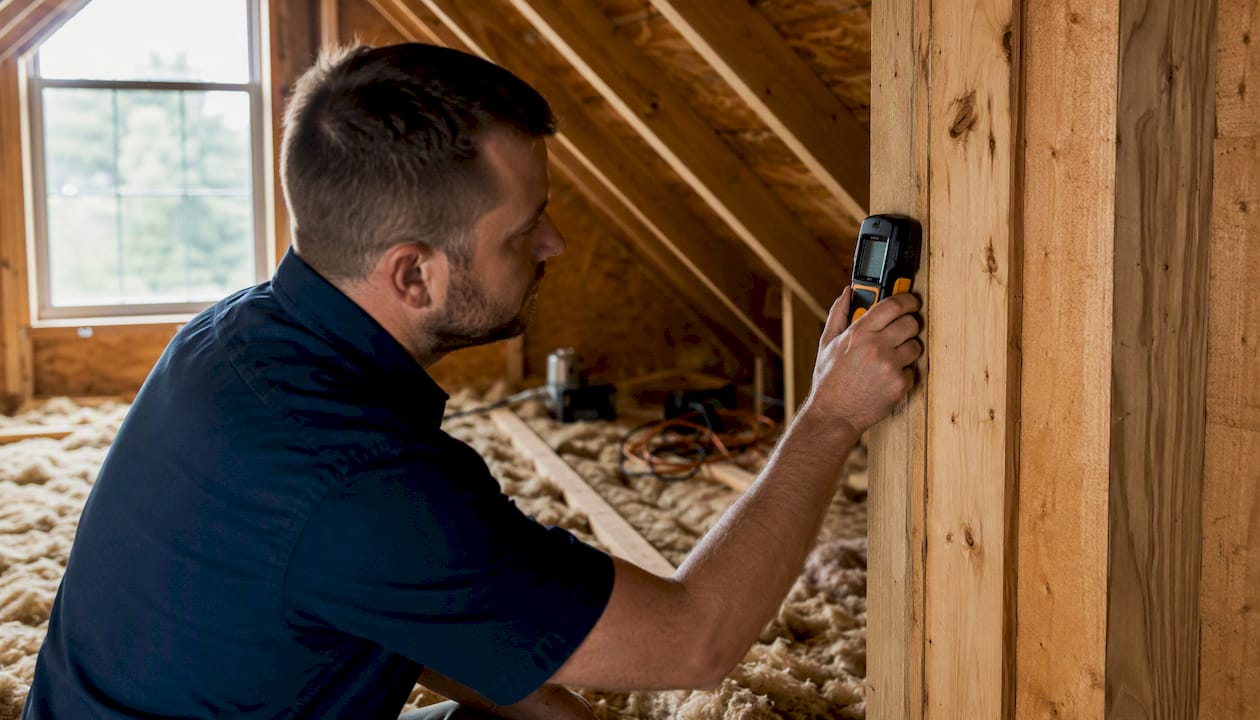
- A professional inspector uses a moisture meter to find wet zones that are invisible to the naked eye.
- Inspections create a documented baseline — useful for insurance claims, real estate transactions, and post-remediation clearance.
- Early detection typically costs far less than remediation after a colony has spread to structural materials.
When should you actually get a mold inspection?
Some triggers are obvious; others are easy to dismiss until the problem gets expensive.
High-priority situations:
- Visible mold growth anywhere in the home, even a small patch on a bathroom ceiling
- A persistent musty odor that does not clear after cleaning and ventilating
- Recent or recurring water damage: burst pipes, roof leaks, basement flooding, or appliance failures
- Unexplained health symptoms (chronic congestion, coughing, headaches) that improve when occupants leave the building
- Post-disaster situations — mold can colonize building materials within 24–48 hours after flooding or fire suppression
Transaction and clearance triggers:
- Pre-purchase inspections: buyers often add a mold contingency when a home has a history of water damage or is in a humid climate
- Post-remediation clearance: after mold removal, a clearance test confirms the work was effective before you close walls or finalize a sale
- Rental property turnover when a tenant reports odors or health complaints
Pro Tip: Before the inspector arrives, photograph any water stains, discoloration, or areas of concern and pull together maintenance records for the HVAC system and any past plumbing repairs. Inspectors use that history to prioritize where they look first, which saves time and can reduce the number of samples needed.
Visual inspection vs. mold testing: what's the difference?
These two services are often sold together, but they are not the same thing, and understanding the distinction tells you exactly where your money goes.
A visual inspection is a walk-through with a moisture meter and a trained eye. The inspector checks high-risk areas, documents findings, and delivers a written report. No samples are collected. This is the baseline service and covers the majority of what most homeowners actually need.
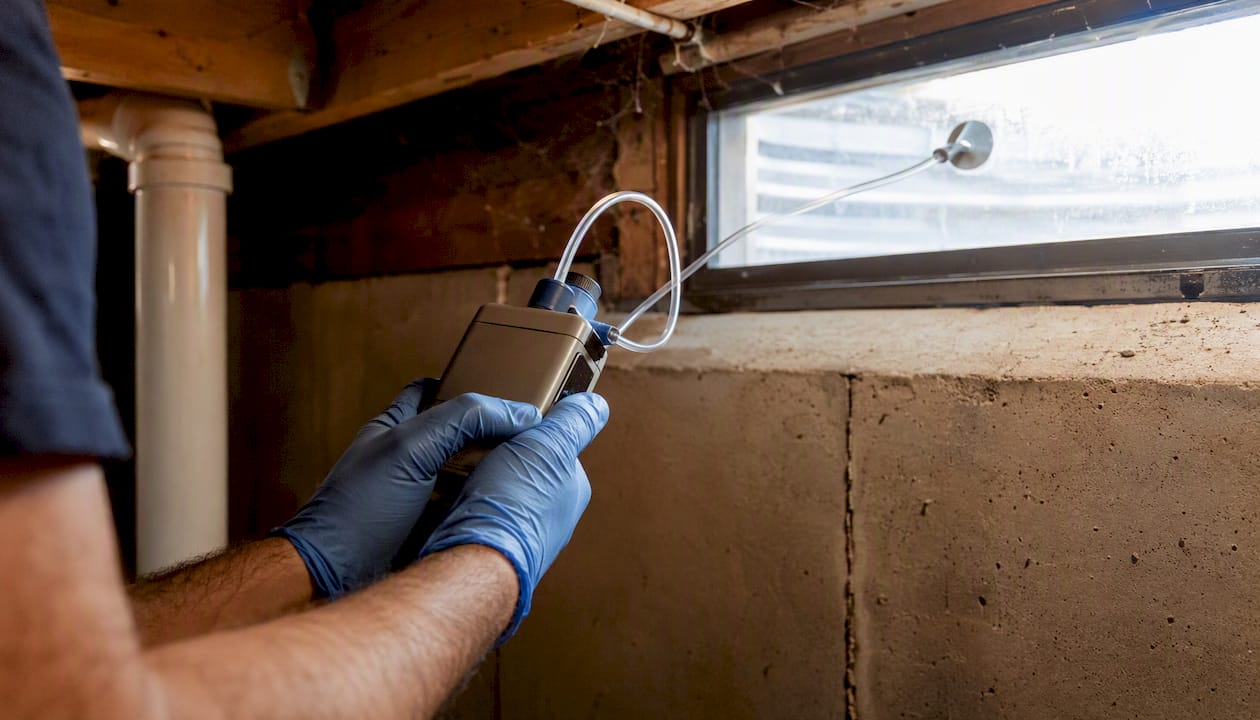
Mold testing (also called sampling) goes further: the inspector collects air samples, surface swabs, or bulk material samples and sends them to a certified lab. Results identify mold species and spore concentrations. Testing adds both time and cost on top of the base inspection fee.
The EPA advises that routine sampling is usually unnecessary. Testing makes sense when results will actually change what you do next — clearance testing after remediation, a pre-purchase dispute, or a suspected toxic mold species like Stachybotrys chartarum.
| Visual Inspection | Inspection + Lab Testing | |
|---|---|---|
| What's included | Walk-through, moisture readings, written report | All of the above plus air/swab samples sent to a certified lab |
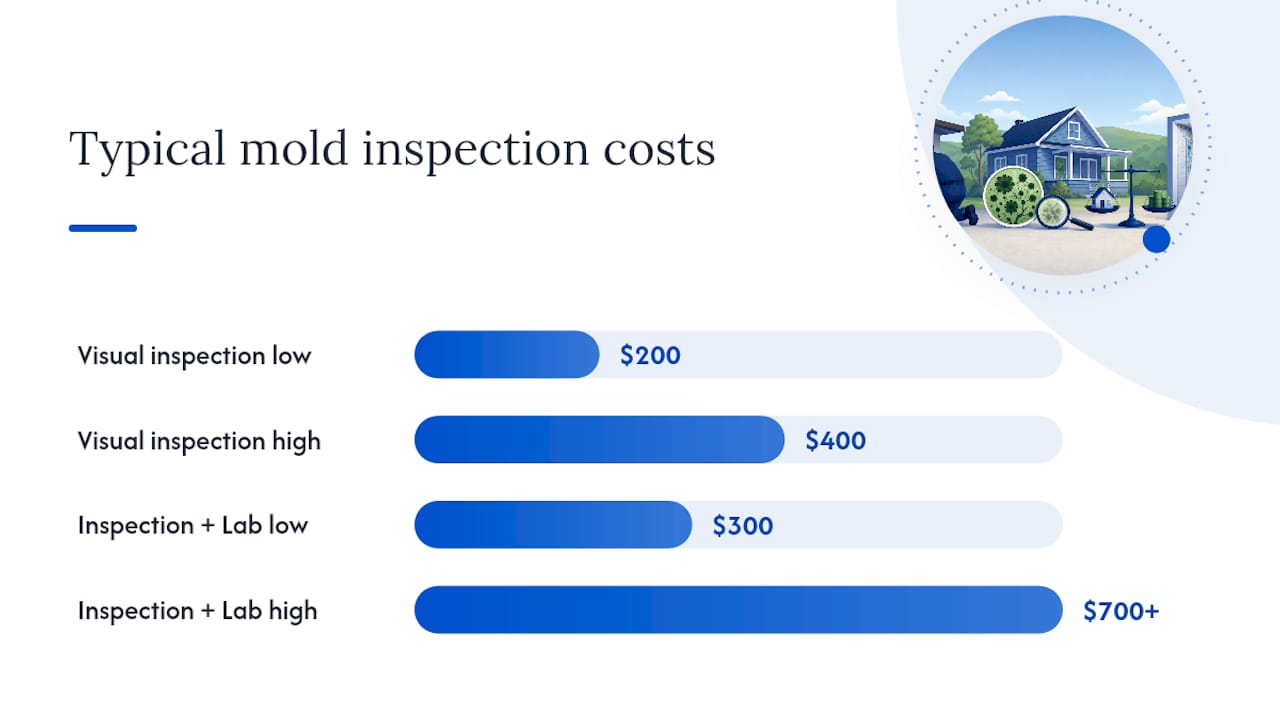
| Typical cost | $200–$400 | $300–$700+ (base fee plus per-sample lab costs) |
| Turnaround | Report same day or next day | Lab results typically 24–72 hours after sample collection |
| Best for | Routine checks, visible mold, insurance documentation | Pre-purchase contingencies, clearance testing, suspected toxic mold |
What actually happens during a mold inspection
Knowing the sequence helps you judge whether a quoted scope is thorough or thin.
- Intake and history review. The inspector asks about past water events, HVAC service records, and any symptoms occupants have noticed. This shapes where they focus.
- Visual walkthrough. Every room is checked, with extra attention to bathrooms, kitchens, basements, crawlspaces, and attic sheathing. The inspector looks for staining, discoloration, and deterioration.
- Moisture readings. A moisture meter probes walls, floors, and ceilings near plumbing and exterior walls. Elevated readings flag hidden wet zones even without visible mold.
- Sample collection (if included). Air cassettes are placed in suspect areas and outdoors for a baseline comparison. Surface swabs target visible growth. Each sample is labeled for chain-of-custody tracking.
- Written report. The inspector documents findings, photographs problem areas, and notes any areas that were inaccessible. If samples were taken, lab results are appended when they arrive.
A typical single-family home inspection takes a few hours on-site. Larger homes or properties with crawlspaces and attics can run longer. Ask upfront whether attic and crawlspace access is included in the quoted price — some inspectors charge an additional $50–$150 for those areas.
What drives the price of a mold inspection?
Two inspectors can quote very different numbers for the same house. Here is what actually moves the price:
- Home size. Larger homes take longer and may require more samples. Homes under 4,000 sq ft commonly fall in the $300–$400 range per HomeAdvisor's national data; larger properties push toward the $700–$1,000+ tier.
- Number and type of samples. Each air sample typically adds $250–$350 in lab fees; swab samples run $200–$300 each. An inspection with three air samples and two swabs can add $1,000 in lab costs alone on top of the base fee.
- Accessibility. Crawlspaces, attics, and sealed wall cavities require extra time and sometimes protective equipment. Expect a surcharge of $50–$150 per hard-to-reach area.
- Suspected mold type. When Stachybotrys (black mold) is suspected, inspectors often add protective procedures and additional sampling, which raises the total.
- HVAC and duct testing. Testing ductwork for mold typically adds $50–$75 per sample.
- Regional pricing. Metro areas with higher labor costs — Washington D.C., New York, San Francisco — run 20–40% above national averages. Rural markets often fall below the national midpoint.
- Emergency or rush visits. After-hours or same-day inspections typically carry a premium of $100–$200 over standard scheduling.
- Retesting and clearance fees. Post-remediation clearance testing is a separate service, usually $200–$400, and is not included in the original inspection fee.
Pro Tip: Ask whether the quoted price includes lab fees or just the on-site visit. Many inspectors quote the inspection separately from lab analysis. Getting both figures upfront prevents the most common billing surprise.
Concrete U.S. price ranges and what you can expect to pay
Forbes Home reports that professional mold inspections range from about $250 to $1,100 nationally, with an average near $675. Angi's aggregated data puts the typical range at $303–$1,045 with an average around $671. Those numbers are consistent enough to be reliable benchmarks.
National average: ~$670. Most U.S. homeowners pay between $303 and $1,045 for a professional mold inspection, with the majority of standard residential jobs landing in the $300–$800 range.
Here is how that plays out by scenario:
| Scenario | Typical Total |
|---|---|
| Small condo or apartment (visual only) | $200–$350 |
| Average single-family home, visual + 2 air samples | $300–$800 |
| Large home (4,000+ sq ft), multiple samples | $700–$1,100 |
| Emergency/after-hours inspection | $700–$1,000+ |
| Post-remediation clearance test | $200–$400 |
Per-sample lab fees from HomeAdvisor's data: air samples run $250–$350 each; swab/culture samples $200–$300 each; HVAC duct samples $50–$75 each. Stain testing adds roughly $150; culture testing adds about $50 per sample.
A basic visual inspection without sampling, per Moldscanner, typically costs $200–$400. Add air sampling and you are looking at $300–$600 for a standard home; large or complex properties can reach $800–$1,500 or more.
Does homeowner insurance cover a mold inspection?
Usually not — at least not as a standalone service. Angi notes that insurance rarely covers routine mold inspections unless the mold stems directly from a covered sudden event, like a burst pipe or storm-driven water intrusion. Mold that developed from deferred maintenance or gradual leaks is almost always excluded.
The key insurance rule: Coverage follows the peril, not the mold. If a covered event (burst pipe, storm damage) caused the moisture that caused the mold, your insurer may cover remediation costs. The inspection that documents that connection can be critical to getting that claim approved.
How to document for a claim:
- Call your insurer before scheduling remediation — some policies require pre-authorization.
- Ask the inspector to note the probable moisture source and timeline in the written report.
- Photograph the damage before any cleanup begins.
- Keep all receipts and contractor invoices.
In most routine cases, budget the inspection as an out-of-pocket expense. The $300–$700 you spend on a professional inspection is typically not reimbursable unless it is part of a documented claim for a covered peril.
How to choose a qualified mold inspector
The mold inspection industry is lightly regulated in most states, which means the quality gap between inspectors is wide. Here is a practical vetting framework.
Credentials to look for:
- IICRC certification (Institute of Inspection, Cleaning and Restoration Certification) — the most widely recognized standard in the restoration industry.
- ACAC credentials (American Council for Accredited Certification) — specifically focused on indoor environmental quality.
- State licensing — some states require mold assessors to hold a specific license; check your state's contractor licensing board.
- Third-party lab affiliation — samples should go to an accredited independent lab, not one owned by the inspector's company.
Questions to ask before booking:
- What is your sampling plan, and how many samples do you recommend for a home this size?
- Which lab do you use, and is it AIHA-accredited?
- What does the written report include, and will it specify the moisture source?
- Do you offer remediation services? (See red flags below.)
Red flags:
- The inspector also sells remediation and pushes you toward it during the inspection visit.
- No written report is offered — verbal-only findings are not useful for insurance or real estate purposes.
- The quote includes no itemization of lab fees versus on-site fees.
- Pressure to sign a remediation contract on the same day as the inspection.
A legitimate inspector's job is to find and document the problem, not to sell you the fix. Separation between inspection and remediation is a basic quality signal.
What to do after you get the inspection report
The report lands in your inbox. Now what?
Reading the lab results: Air sample reports list mold species and spore counts per cubic meter of air. The key comparison is indoor counts versus the outdoor baseline sample the inspector collected. Elevated indoor counts — particularly for species like Stachybotrys, Chaetomium, or Aspergillus/Penicillium — indicate active growth inside the building. Background levels that match outdoor counts usually suggest no significant indoor source.
National average remediation cost: approximately $2,300, per aggregated industry data, though small surface treatments can run under $500 and large structural jobs can exceed $10,000. That context makes a $400–$700 inspection look like cheap insurance.
Typical next steps after a positive finding:
- Get at least two remediation estimates. The inspection report gives contractors a clear scope to bid against.
- Ask each contractor for a written remediation protocol that references the inspector's findings.
- Schedule clearance testing after remediation is complete — this is a separate inspection, typically $200–$400, that confirms spore counts have returned to background levels.
- For real estate transactions, share the report with your agent and attorney before proceeding.
Timelines: Lab results typically arrive 24–72 hours after sample collection. Remediation for a contained area (one room, one wall cavity) can often be completed within a few days. Larger jobs involving structural materials or HVAC systems may take one to two weeks. Clearance testing should happen after the remediation area has been cleaned and sealed but before walls are closed.
The EPA's cleanup guidance recommends professional remediation for any mold covering more than 10 square feet — a useful threshold for deciding whether a DIY cleanup is appropriate or whether you need a contractor.
Practical steps to prevent mold and reduce future inspection costs
Prevention is not complicated. The biology is simple: no moisture, no mold. These steps address the most common moisture sources in U.S. homes.
- Control indoor humidity. Keep relative humidity below 60% year-round. A $30–$50 hygrometer tells you where you stand; a dehumidifier handles the rest in basements and crawlspaces.
- Fix leaks immediately. A slow drip under a sink or a small roof leak can saturate framing within days. Repair within 24–48 hours to stay below the mold-growth threshold.
- Ventilate bathrooms and kitchens. Run exhaust fans during and for 15 minutes after showers and cooking. If your bathroom fan vents into the attic instead of outside, fix that first.
- Maintain gutters and grading. Clogged gutters and soil that slopes toward the foundation are two of the most common causes of basement moisture intrusion.
- Inspect after major weather events. Heavy rain, ice dams, and high winds can create entry points that are not immediately obvious. A quick attic and basement check after a major storm takes 20 minutes and can catch a problem before it spreads.
- Service the HVAC system annually. Drain pans, coils, and ductwork are common mold sites in humid climates. Annual service includes a visual check of these components.
Pro Tip: Schedule a routine mold check every 3–5 years if your home has a basement, crawlspace, or a history of water events. After any renovation that opens walls or disturbs insulation, a post-construction inspection is worth the cost — construction debris and exposed framing are prime mold substrates.
Is a professional mold inspection actually worth the money?
The short answer: yes, when the situation warrants it. The longer answer involves comparing what you spend against what you risk missing.
A professional inspection typically costs $300–$700. The EPA's guidance is clear that testing should be targeted — done when results will change the decision. That framing is useful for homeowners too: if you have visible mold, you do not need a test to tell you it is there. You need a professional to find the source and scope the problem.
The case for professional inspection: HomeAdvisor's data shows that a professional inspection reliably identifies moisture sources that DIY checks miss — the hidden wet zone behind a wall, the condensation problem in an HVAC plenum — and that early identification consistently reduces total remediation cost.
Where the math gets compelling:
- A missed mold problem in a wall cavity can spread to structural framing, pushing remediation costs from a few hundred dollars into the thousands.
- In a real estate transaction, an undisclosed mold problem can kill a deal or trigger post-closing litigation. A pre-purchase inspection that costs $500 can protect a $400,000 transaction.
- Health costs from prolonged mold exposure — repeated doctor visits, allergy medications, lost workdays — often exceed the inspection fee within a few months.
DIY mold test kits are available for $10–$50, but they have a documented limitation: they cannot identify the moisture source, they cannot quantify spore concentrations against an outdoor baseline, and they produce results that most insurers and real estate attorneys will not accept. They can confirm mold is present somewhere, but that is usually not the question a homeowner actually needs answered.
Pure Resto's perspective on mold inspections
Most homeowners who call us after finding mold have already spent weeks wondering whether the problem is serious. The inspection answers that question in a single visit. What we see consistently in Maryland homes is that the visible patch is rarely the whole story — the real growth is usually behind it, inside the wall cavity or under the subfloor, and a moisture meter finds it in minutes.
Purerestomd's inspection team is IICRC-certified and operates 24/7 across Maryland, including Annapolis, Columbia, College Park, and surrounding communities. Every inspection includes a written report, moisture mapping, and direct insurance billing when a covered event is involved. We do not sell remediation on the inspection visit — the report is yours to use however you need it.
Proof points:
- IICRC-certified inspectors and remediation technicians
- 30-minute emergency response time across Maryland
- Direct insurance billing for covered water and mold events
- Written inspection reports suitable for real estate transactions and insurance claims
- Service across Maryland including Laurel, Fort Meade, Fulton, Adelphi, Clarksville, and Fairmount Heights
Ready to book a mold inspection in Maryland?
Purerestomd gives Maryland homeowners a faster, clearer path through the inspection process than most general contractors offer. The 30-minute emergency response time means you are not waiting days to find out whether a water event has already seeded a mold problem.
Every inspection includes a written report with moisture readings, photographic documentation, and a clear scope of findings. Direct insurance billing is available when the mold ties to a covered event. No pressure to buy remediation on the same visit — just a thorough, documented assessment you can act on.
Serving Adelphi, Columbia, Fulton, Fort Meade, and communities across Maryland. Request a written quote today and get a same-day response.
Sources
These are the primary references used for cost data and health guidance in this article:
- How Much Does a Mold Inspection Cost?
- How Much Does It Cost to Get a Mold Inspection? 2025 Data
- How Much Does a Mold Inspection Cost? 2026 Data | Angi
- Mold Inspection Cost: What to Expect in 2026
This article is general information, not a substitute for advice from a qualified doctor. Consult a qualified healthcare professional about your own circumstances before acting on anything here.
FAQ
Is mold testing worth the cost?
Yes, when the results will change what you do next. The EPA recommends targeted testing for situations like clearance testing after remediation, pre-purchase disputes, or suspected toxic mold — not as a routine measure for every home.
How do you test for mold in your house?
A certified inspector collects air samples and surface swabs, sends them to an accredited lab, and compares indoor spore counts to an outdoor baseline. DIY kits can confirm mold is present but cannot identify the moisture source or produce results accepted by insurers or real estate attorneys.
Will insurance pay for a mold inspection?
Rarely. Angi's data confirms that coverage applies only when mold results from a covered sudden event like a burst pipe — not from gradual leaks or deferred maintenance. Budget the inspection as an out-of-pocket expense in most cases.
Can a house full of mold be saved?
In most cases, yes. The EPA's cleanup guidance recommends professional remediation for mold covering more than 10 square feet, but even extensive mold growth is treatable when the moisture source is identified and eliminated. Structural damage from long-term growth is the main factor that complicates full restoration.