

If you've found mold or smell that musty odor after water damage, call a certified local remediation team immediately. Purerestomd offers 24/7 emergency mold remediation with a rapid response window across the Glen Burnie area, and getting a team on-site fast is the single biggest factor in keeping the damage small.
Before help arrives:
- Shut off the water source if there's an active leak or pipe break.
- Don't scrub, spray, or disturb visible mold. That just spreads spores into rooms that were clean.
- Photograph everything: the affected area, the water source, and the date you found it.
On that first call, expect a quick phone checklist (location, square footage affected, whether the water is still active) and a dispatch window, not a vague "we'll call you back."
Key Takeaways
Acting within 24 to 48 hours of discovering mold or water damage, and hiring a certified team that verifies moisture levels before rebuilding, is what actually prevents recurrence and controls cost.
| Point | Details |
|---|---|
| Call fast, don't scrub | Stop the water source, photograph the damage, and avoid disturbing mold before a technician arrives. |
| Full process matters | Inspection, containment, HEPA filtration, removal, drying, and restoration each play a role in preventing recurrence. |
| Moisture verification is the real fix | Cleaning alone fails if the moisture source isn't repaired and dryness isn't measured, not eyeballed. |
| Documentation speeds insurance claims | Photograph damage at discovery and get an itemized scope with moisture readings for your adjuster. |
| Purerestomd offers local, certified response | IICRC-certified technicians, 24/7 dispatch, a 30-minute response window, and direct insurance billing serve the Glen Burnie area. |
Table of Contents
- What a Local Mold Damage Service in Glen Burnie MD Actually Includes
- What Happens During Mold Remediation, Step by Step
- How Fast Do You Need to Act on Mold Damage?
- What Determines Mold Remediation Cost?
- How Does Insurance Coverage Work for Mold Damage?
- Why Local Credentials and Response Time Actually Matter
- The Part Nobody Tells You About Mold Remediation
- Get Your Glen Burnie Mold Damage Inspected Today
- Sources
- FAQ
What a Local Mold Damage Service in Glen Burnie MD Actually Includes
Before you dial anyone, know what a full-service job should cover. A local mold damage service in Glen Burnie, MD, that's worth hiring handles the entire arc, not just the parts that are easy to bill.
- Inspection and testing to confirm mold type, extent, and moisture source.
- Containment with physical barriers to stop spores from spreading room to room.
- HEPA air filtration to scrub airborne particles during the work.
- Removal and demolition of drywall, insulation, or carpet that can't be saved.
- Drying and dehumidification to bring moisture levels back to normal.
- Antimicrobial cleaning on salvageable surfaces.
- Restoration and repairs, rebuilding what was torn out.
- Contents cleaning and pack-outs for furniture, documents, and belongings caught in the damage.
Which service you book depends on the scenario. Visible mold on a bathroom wall might only need inspection, containment, and cleaning. A recent flood usually needs the full sequence, drying included. Suspected hidden mold, behind cabinets or under flooring, calls for an inspection with moisture mapping before anyone touches a wall. Because Purerestomd runs 24/7 with direct insurance billing, you can request service the moment you spot a problem instead of waiting for business hours.
What Happens During Mold Remediation, Step by Step
Here's the actual workflow a remediation crew follows once they're on-site, from first walkthrough to final sign-off.
- Inspection and assessment. Technicians map moisture with meters and hygrometers, checking walls, subfloors, and HVAC ducts you can't see from the room. If mold type matters for the scope of work, they'll take samples for lab testing.
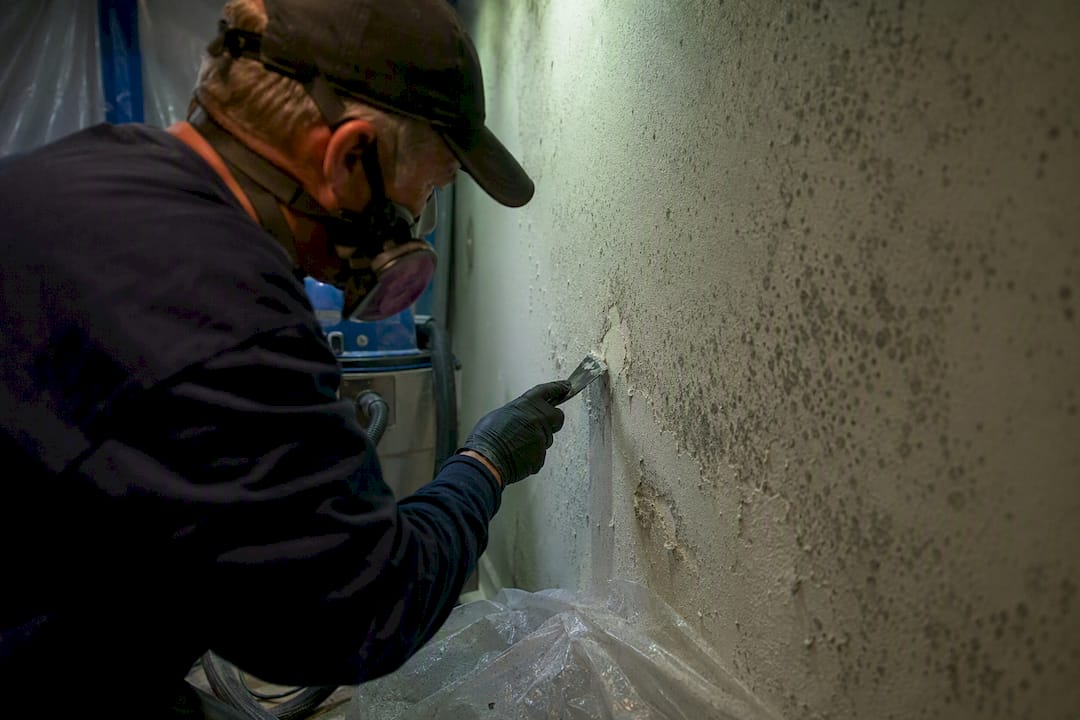
- Containment. Plastic sheeting seals off the work zone, and negative air pressure keeps spores from drifting into the rest of the building while walls or flooring come out.
- Air filtration. HEPA filtration units run continuously in the contained area, and if the HVAC system was compromised, it gets isolated so it doesn't recirculate contaminated air through the whole property.
- Removal versus cleaning. Porous materials, drywall, carpet padding, insulation, get removed because mold grows into the fibers and can't be fully cleaned out. Nonporous surfaces like tile, glass, and some sealed wood get antimicrobial treatment and stay in place.
- Drying and dehumidification. Industrial air movers and dehumidifiers run until moisture readings return to normal, not until the space "looks dry." That distinction is where a lot of DIY attempts and lower-end contractors fall short.
- Restoration and documentation. Once the space is verified dry, repairs begin: new drywall, flooring, paint. The crew documents the whole process with photos and moisture logs, which becomes your clearance paperwork for insurance and for your own records.
Pro Tip: Ask for moisture readings in writing before and after drying, not just a verbal "it's dry now." That paper trail is what insurance adjusters and future buyers actually want to see.
The EPA's own guidance on mold remediation is blunt about this: bleach, vinegar, and baking soda don't reach mold growing inside porous materials, and none of it matters if the moisture source stays unfixed. That's the whole reason step 5 exists before step 6 even starts.
How Fast Do You Need to Act on Mold Damage?
Speed matters more than most people assume, and it's not just about appearances.
- Call immediately if you notice: visible mold growth, a persistent musty smell, unexplained allergy or respiratory symptoms in the building, or any flooding or leak in the last 48 hours.
- Why the 24 to 48 hour window matters: mold colonies can establish and spread within that timeframe after water exposure, and the EPA's remediation guidance treats moisture control as the priority precisely because delay lets a small problem become a structural one.
- Realistic scheduling: most local providers, Purerestomd included, offer same-day or next-business-day inspection. Actual remediation runs one to seven days depending on how much material is affected. Larger structural rebuilds, replacing subflooring or load-bearing framing, take longer and get scoped separately.
Waiting a week to "see if it gets worse" almost never saves money. It just moves you from a cleaning job to a rebuild.
What Determines Mold Remediation Cost?
Every estimate is built from a handful of variables, and understanding them helps you read a quote instead of just trusting the bottom line.
- Square footage affected. More area means more containment, more air filtration time, more labor.
- Material type. Porous materials that must be torn out and replaced cost more than nonporous surfaces that just need cleaning.
- Accessibility. Mold behind a finished wall or under a slab costs more to reach than mold on an open basement ceiling.
- Extent of water damage. A slow leak that's been running for weeks does more damage than a single flood event caught quickly.
- Testing requirements. Lab sampling for mold type adds to the bill but can also be what your insurer requires for a claim.
Here's the part that actually saves money long-term: acting fast and verifying moisture levels properly keeps a job from turning into a bigger rebuild. A contained, well-documented job with clear before-and-after moisture readings tends to cost less overall than a delayed job that spreads.
When you're comparing estimates, look for an itemized scope of work, specific moisture-verification steps, and a promise of post-work documentation. A quote that just says "mold removal, one price" without breaking down materials, labor, and drying time is harder to trust and harder to dispute if something's missed.
How Does Insurance Coverage Work for Mold Damage?
Insurance claims move faster when you've documented things properly from the moment you found the problem, and slower when you haven't.
- Photograph and record everything at discovery. Note the date you found the mold, take wide and close-up photos, and write down what you suspect caused it (a leaking pipe, a roof issue, a prior flood).
- Let the remediation company's paperwork do the heavy lifting. A detailed scope of work and a final clearance report, showing moisture readings before and after, gives an adjuster concrete evidence instead of your word alone.
- Use direct billing where it's offered. When a provider bills your insurer directly, you're not fronting the full cost and waiting on reimbursement, which matters a lot when a job runs into the thousands.
When you talk to your adjuster, stick to documented facts, the discovery date, the suspected cause, and the contractor's written scope. That's the version of the story that actually holds up in a claim review.
Why Local Credentials and Response Time Actually Matter
Certifications aren't just a logo on a website. IICRC (Institute of Inspection, Cleaning and Restoration Certification) training means a technician has been tested on the actual science of moisture mapping, containment, and safe removal, not just handed a mop and a respirator.
- IICRC-certified technicians on every job
- 24/7 emergency dispatch, including nights and weekends
- A 30-minute response commitment for emergency calls
- Direct insurance billing to remove the upfront cost barrier
- Local coverage with dedicated Glen Burnie mold inspection service pages showing real jobs and outcomes
Customer feedback on Purerestomd's Glen Burnie and Adelphi location pages points to a consistent pattern: fast arrival, clear communication about moisture readings, and smooth coordination with insurance adjusters. The same workflow shows up on other Maryland location pages, including Gaithersburg, which suggests a repeatable process rather than one-off luck.
Property owners consistently describe the value less in terms of the cleanup itself and more in how quickly a crew showed up and how clearly they explained what the moisture readings meant for the claim.
The Part Nobody Tells You About Mold Remediation
Most articles on this topic treat mold remediation like a single event: mold appears, someone removes it, done. That's not how it works, and treating it that way is exactly why mold comes back in so many homes.
The conventional advice, "clean it with bleach and keep an eye on it", ignores the actual mechanism. Mold doesn't come back because someone missed a spot with a sponge. It comes back because the moisture source was never fixed. You can remove every visible trace of mold and still have a recurring problem within months if the leak behind the wall is still there.
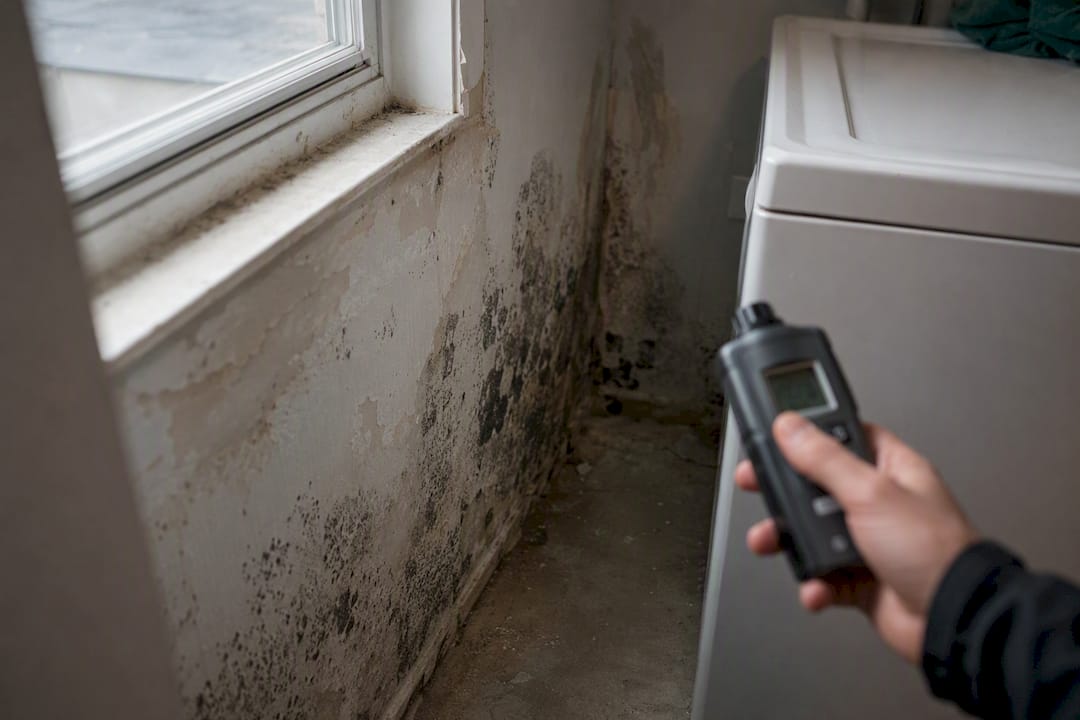
What actually matters, more than the cleaning itself, is the sequence: verify the moisture source, contain the area, remove what can't be salvaged, dry it to a measured standard, then rebuild. Skip a step, especially the drying verification, and you're paying for the same job twice.
If there's one thing property owners in Glen Burnie should prioritize, it's not price. It's response time and documentation. A slow response lets the problem spread past what a quick cleaning can fix, and poor documentation is what turns a straightforward insurance claim into a drawn-out dispute.
— Pure
Get Your Glen Burnie Mold Damage Inspected Today
Purerestomd gives you something most local contractors can't: a documented 30-minute emergency response, IICRC-certified technicians on every job, and direct insurance billing so you're not fronting thousands of dollars while a claim processes.
If you've spotted mold, smelled that musty odor, or dealt with a leak in the last day or two, request service now. Have your address, a short description of what you're seeing (visible mold, water source, how long it's been an issue), and a few photos ready when you call or submit a request through Purerestomd's main site. The faster that information reaches a dispatcher, the faster containment and drying can start, which is the single biggest lever you have over how much this ends up costing.
FAQ
What Is the Average Cost to Remove Mold?
Cost varies widely based on square footage, material type, and how much demolition and drying is required, so the only reliable number is an itemized estimate from an inspection of your specific property.
How Likely Is Mold to Come Back After Remediation?
Mold returns mainly when the underlying moisture source wasn't fully fixed, which is why the EPA's guidance treats moisture control, not just cleaning, as the core of effective remediation.
What's the Difference Between Mold Removal and Mold Remediation?
Mold removal refers to physically taking out mold and affected materials, while remediation is the full process, inspection, containment, removal, drying, and restoration, aimed at fixing the root cause so mold doesn't return.
Can Black Mold Be Fully Remediated?
Yes, black mold can be fully remediated using the same containment, removal, and drying process as other mold types, provided the moisture source is identified and corrected as part of the job.
How Fast Can a Local Mold Damage Service in Glen Burnie MD Respond?
Purerestomd advertises a rapid emergency response window with 24/7 availability for mold and water damage calls across the Glen Burnie area.