
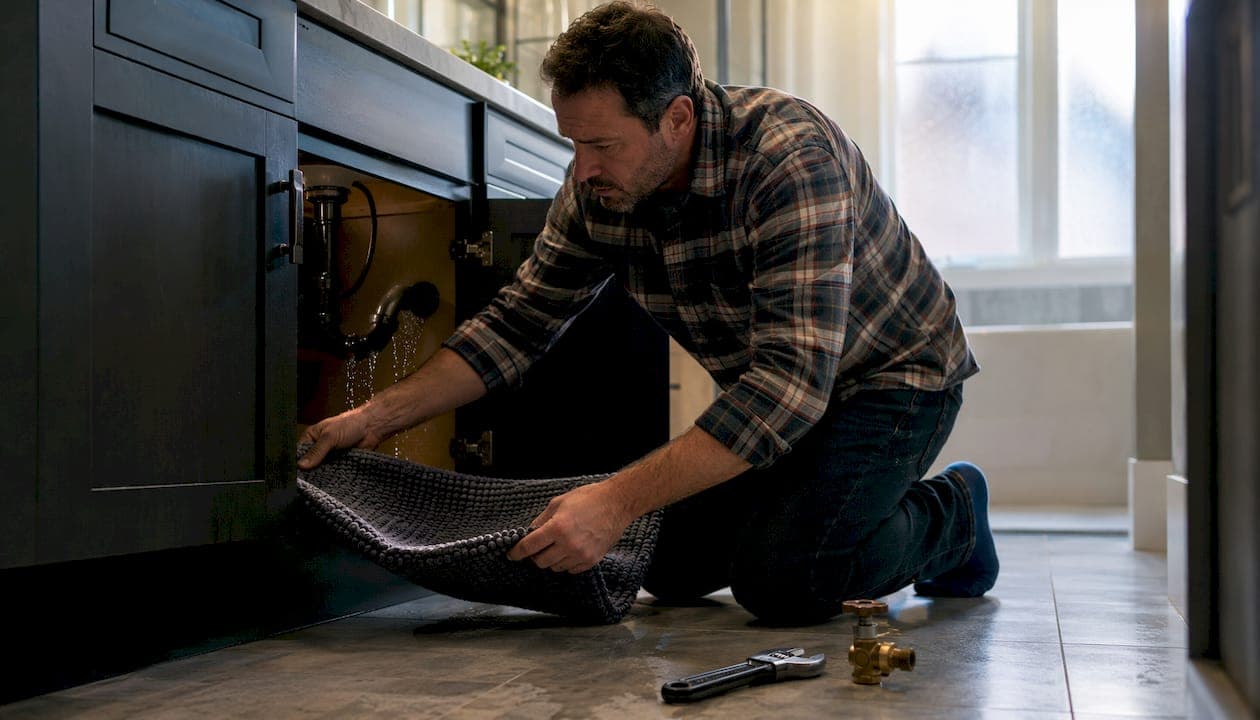
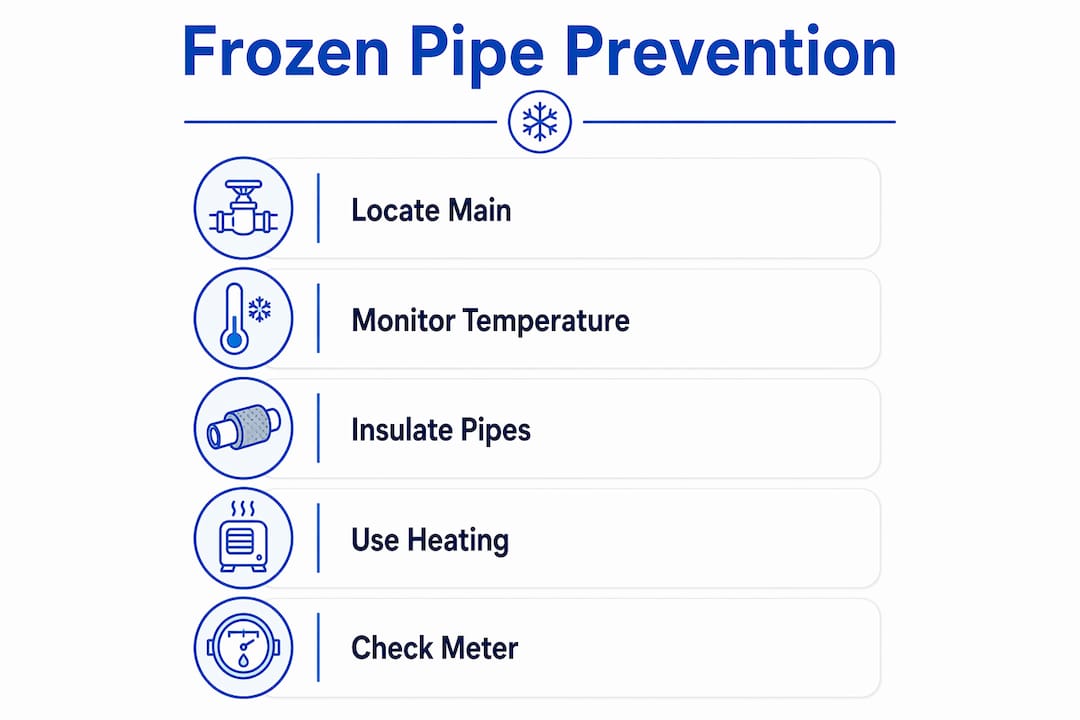
A frozen pipe can and often does burst. Treat any frozen pipe as a high-risk emergency, and locate your main water shutoff right now, before you do anything else.
Here is what to do in the first five minutes:
- Find your main water shutoff valve and confirm it turns freely. During widespread freezes, municipal crews may be overwhelmed, so you cannot count on outside help arriving fast.
- Open the nearest faucet on the affected line to relieve pressure and give melting water somewhere to go.
- Stay away from standing water near electrical panels, outlets, or appliances. If water is already visible near wiring, shut off the circuit breaker for that area before entering.
- Call emergency help if you see active water flowing, hear a loud crack, or cannot locate the shutoff.
Never use an open flame, blowtorch, or kerosene heater to thaw a pipe. The water inside can boil and cause the pipe to explode. This is not a minor caution — it is the single most dangerous mistake homeowners make.
Burst pipes rank among the most common causes of winter property damage in the U.S., often resulting in thousands of dollars in repairs. The next few sections explain why, what to watch for, and exactly how to respond.
Table of Contents
- Why do frozen pipes crack and burst?
- What are the early signs a pipe is freezing?
- How do you thaw frozen pipes safely?
- What should you do if a pipe has already burst?
- How can you prevent pipes from freezing this winter?
- When should you call a plumber or restoration professional?
- Key Takeaways
- What restoration pros see that homeowners miss
- Purerestomd responds to burst pipes in Maryland around the clock
- Useful sources
Why do frozen pipes crack and burst?
Water is unusual: it expands when it freezes. That expansion inside a sealed pipe builds pressure, and it is the pressure, not the ice itself, that cracks or ruptures the pipe wall. The break often happens not at the frozen section but somewhere downstream where pressure has nowhere to go.
Pipes begin to freeze at 32°F, but practical risk rises sharply once temperatures drop below roughly 20°F, especially for pipes in unheated spaces. Wind chill accelerates the process considerably. A pipe along an exterior wall with a small air gap behind it can freeze faster than a pipe in a heated basement even when outdoor temps are the same.
| Condition | Freeze risk | Typical time to potential burst |
|---|---|---|
| 32°F, still air, insulated pipe | Low | Hours to days, if ever |
| 20°F, wind, uninsulated pipe | High | 1 hour |
| Below roughly 20°F, exposed exterior pipe | Very high | Under 2 hours |
| Pipe in unheated garage or crawl space | High at any sub-freezing temp | Several hours depending on exposure |
The Michigan Committee for Severe Weather Awareness estimates a quarter-million homes are damaged each winter from frozen water pipes. An eighth-inch crack in a pipe can leak up to 250 gallons of water per day. Both copper and PVC pipes are vulnerable; neither material is immune.
One more thing worth knowing: a pipe can be cracked and still appear dry while frozen. The ice plug seals the break temporarily. The leak only appears when thawing begins, which is why you must have your shutoff located and towels or buckets ready before you start any thawing attempt.
What are the early signs a pipe is freezing?
Catching a freeze before it becomes a rupture saves you from the cleanup entirely. The signs are usually subtle at first.
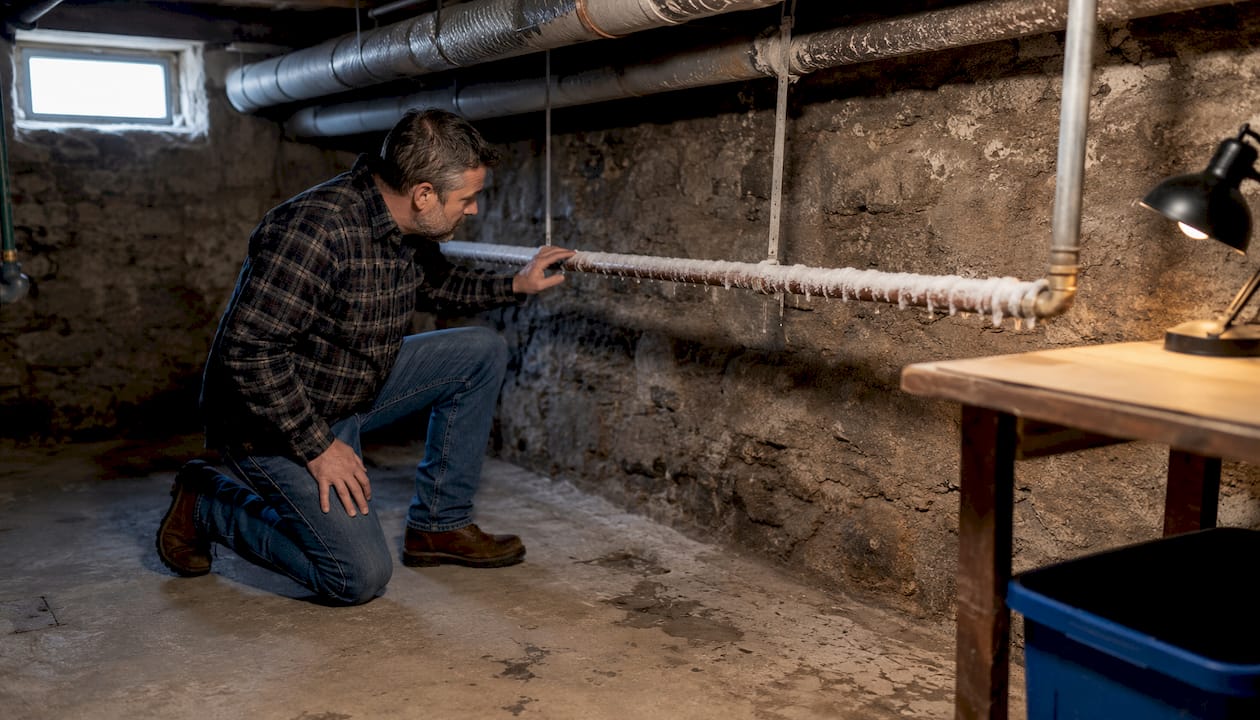
Water flow cues are the fastest indicator. Turn on a faucet and get a trickle or nothing at all. If only one fixture is affected, the freeze is likely localized. If multiple fixtures on the same wall or floor lose pressure simultaneously, the frozen section is probably on a shared supply line, and the situation is more urgent.
Physical cues on the pipe itself include visible frost or condensation on the pipe exterior, a section of pipe that looks slightly swollen or bulged, and unusual sounds when you run other faucets. Gurgling or banging often means water is trying to move past a partial ice blockage.
A pipe that looks completely normal on the outside can already be cracked. Because the ice plug temporarily seals the break, thawing commonly reveals hidden damage the moment melting begins. Always have the main shutoff within reach before you start.
Where to check first: pipes along exterior walls, in unheated basements, attics, garages, and crawl spaces are the most likely to freeze. Run your hand along accessible pipe runs in those areas. Cold to the touch is normal; frost or a hard, rigid section is not.
The meter test: shut off all fixtures and watch your water meter. If the dial moves, water is escaping somewhere, meaning a pipe may have already cracked. No movement with all fixtures off means the system is still sealed.
How do you thaw frozen pipes safely?
Speed matters, but method matters more. Follow this sequence and you will avoid the two most common thawing disasters: a fire and a secondary burst.
- Keep the faucet open. Steam and melting water need somewhere to go. A closed faucet traps pressure and can cause a secondary rupture even in a section that was not originally frozen.
- Start heating at the faucet end, not the frozen section. Work backward toward the freeze. This lets melting water and steam exit through the open faucet instead of building pressure behind the ice plug. Consumer Reports confirms this direction as the practitioner-recommended approach.
- Use approved heat sources only: a hair dryer on a low or medium setting, an electric heating pad wrapped around the pipe, warm (not boiling) towels, or a space heater placed at a safe distance. For bathrooms or wet areas, plug space heaters into a GFCI outlet.
- Monitor the entire line, not just the frozen section. A single supply line can have multiple freeze points. As one section thaws, check the pipe run in both directions for additional cold or frost.
- Watch for leaks the moment water starts flowing. If you see water spraying or dripping from a joint or crack, shut off the main valve immediately and call a plumber.
Never use these methods:
- Open flames, propane torches, or blowtorches
- Kerosene or propane space heaters near the pipe
- Charcoal stoves or any combustion heat source indoors
- Boiling water poured directly on the pipe
Open flames can cause water inside the pipe to boil and generate explosive pressure, and they present an immediate fire risk to surrounding framing and insulation. Restoration crews regularly respond to house fires that started during a DIY pipe-thawing attempt.
Pro Tip: Before you apply any heat, locate the main shutoff and set a bucket or towels under the pipe. The moment thawing begins, a previously hidden crack can open. Having the shutoff within arm's reach is the difference between a minor drip and a flooded room.
What should you do if a pipe has already burst?
A burst pipe is a water emergency. The sequence below is prioritized by what causes the most damage if delayed.
First 60 seconds:
- Shut off the main water supply immediately. Every second of flow adds to the damage.
- Turn off electricity to any affected rooms if you can reach the breaker panel safely without walking through standing water.
- Open faucets throughout the house to drain remaining pressure from the lines.
Next five minutes:
- Place towels, buckets, or plastic sheeting to slow water spread.
- Do not run HVAC or forced-air systems if water has reached ductwork.
- Avoid walking through standing water near any electrical source.
Documentation (do this before cleanup begins):
- Photograph everything: the burst location, water spread, damaged contents, and any visible structural damage.
- Keep all receipts for emergency supplies, hotel stays, or temporary repairs.
- Call your insurance provider promptly. Most standard homeowners policies cover sudden and accidental pipe bursts, but coverage varies and timing matters. Delayed reporting can complicate claims.
Immediate professional restoration reduces long-term repair costs and mold risk. Restoration pros provide water extraction, structural drying, moisture mapping, mold prevention, and contents packout, and many offer direct insurance billing to simplify the claims process.
The call order: plumber first to stop the source, then a certified restoration service for water extraction and drying. Mold can begin developing within 24–48 hours of a water event, so drying is not optional or something to defer until the weekend.
How can you prevent pipes from freezing this winter?
Most frozen pipe events are preventable. The measures below range from free to a few hundred dollars, and any one of them can be the difference between a normal winter and a five-figure repair bill.
Before the cold arrives:
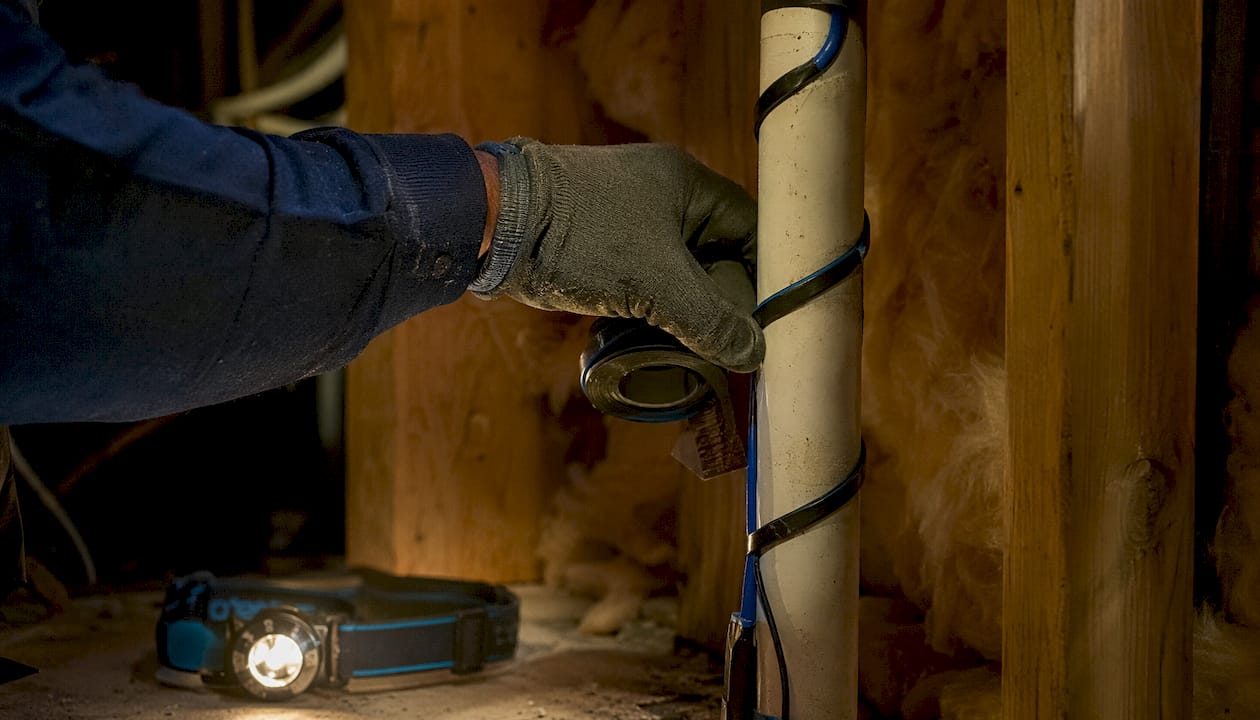
- Insulate pipes in crawl spaces, attics, and along exterior walls using foam pipe sleeves or fiberglass wrap. The more insulation, the better.
- Seal air leaks around electrical wiring, dryer vents, and pipe penetrations with caulk or spray foam. A small gap can let in enough cold air to freeze a pipe during a hard wind chill.
- Disconnect and drain garden hoses. Use an indoor shutoff valve to drain the short pipe section leading to outdoor spigots.
- Install UL-listed heat tape or thermostatically controlled heat cables on pipes that cannot be insulated adequately. Follow manufacturer instructions exactly; use only products rated for the specific application (interior vs. exterior).
During a freeze:
- Keep the thermostat at or above 55°F even when you are away. This is the widely accepted minimum threshold.
- Keep garage doors closed if water supply lines run through the garage.
- Open cabinet doors under kitchen and bathroom sinks on exterior walls to let heated air reach the pipes.
- Let a faucet drip on lines that serve exterior walls during extreme cold. Moving water freezes more slowly than standing water.
| Measure | Cost range | Best for |
|---|---|---|
| Foam pipe sleeves | $1–$5 per foot | Crawl spaces, attics, basements |
| Heat tape (UL-listed) | $15 to $60 | Pipes that cannot be relocated |
| Caulk/spray foam for air gaps | $5–$20 | Exterior wall penetrations |
| Thermostat at 55°F or above | No added cost | All homes when unoccupied |
| Dripping faucet | Minimal water cost | Extreme cold nights |
Longer-term upgrades: if a pipe run along an exterior wall has frozen more than once, the right fix is re-routing it to an interior wall or adding rigid foam insulation to the wall cavity. Pre-freeze checklists from AccuWeather emphasize that low-cost measures work even in homes not built for frequent hard freezes, but chronic problem pipes eventually need a structural solution.
When should you call a plumber or restoration professional?
Some situations are beyond a hair dryer and a bucket. Call a licensed plumber immediately if:
- Water is actively gushing or you cannot locate or operate the main shutoff
- Multiple fixtures on different floors or walls have lost flow simultaneously
- The frozen section is inside a wall, ceiling, or crawl space you cannot safely access
- You see water near electrical panels, outlets, or appliances
- Visible structural damage has occurred (sagging ceiling, warped flooring, water-stained drywall)
Once the water source is controlled, a certified restoration service handles what comes next. A professional team will perform water extraction, set industrial drying equipment, use moisture mapping tools to find water that has migrated behind walls or under floors, and assess mold risk. If contents are saturated, packout and secure storage protect belongings during the drying process.
What to ask for and look for:
- IICRC certification for water damage restoration
- 24/7 emergency response availability
- Direct insurance billing so you are not fronting costs out of pocket
- A written scope of work before drying equipment is placed
Have the following ready when you call: photos of the damage, the location of your main shutoff, your insurance policy number, and clear access instructions for the responders. The faster a restoration crew can set up drying equipment, the lower the total repair cost tends to be.
Key Takeaways
A frozen pipe that goes unaddressed can burst within hours and cause thousands of dollars in damage; locating your main shutoff and acting immediately are the two steps that matter most.
| Point | Details |
|---|---|
| Treat every frozen pipe as high risk | A frozen pipe can be cracked and still appear dry; the break only shows when thawing begins. |
| Locate the main shutoff first | Municipal crews may be overwhelmed during widespread freezes; know where your shutoff is before an emergency. |
| Never use open flames to thaw | Blowtorches and open flames can boil water inside the pipe and cause an explosion or fire. |
| Keep thermostat at 55°F or above | The American Red Cross minimum threshold when a home is unoccupied or during extreme cold. |
| Purerestomd for emergency response | Purerestomd provides 24/7 water damage restoration in Maryland with IICRC certification and direct insurance billing. |
What restoration pros see that homeowners miss
The most common call Purerestomd receives after a pipe event is not from a homeowner who panicked. It is from one who waited. They tried to manage the water with towels, assumed the drywall would dry on its own, and called three days later when they noticed a smell. By that point, mold had already started behind the baseboard.
The second most common mistake is the thawing method. Homeowners reach for whatever produces heat fastest, and that often means a propane torch from the garage. The pipe survives, the framing does not.
What restoration crews prioritize on arrival is not obvious to most people: it is not the visible water, it is the water you cannot see. Moisture that has wicked into subfloor, wall cavities, and insulation causes far more long-term damage than the puddle on the floor. Industrial drying equipment and moisture meters find it. Towels and fans do not.
The honest advice: do the immediate steps yourself, shut off the water, document everything, and then call professionals for extraction and drying. The DIY window is about 30 minutes. After that, the risk of hidden moisture damage and mold grows faster than most homeowners expect.
Purerestomd responds to burst pipes in Maryland around the clock
When a pipe bursts at 2 AM in January, the damage does not wait for business hours. Purerestomd provides 24/7 emergency water damage restoration across Maryland, with a 30-minute rapid-response time that limits how far water spreads before extraction begins.
The team carries IICRC certification for water damage restoration and mold remediation, uses industrial-grade extraction and drying equipment, and handles direct insurance billing so homeowners are not navigating a claims process alone while their house is wet. Services include water extraction, structural drying, moisture mapping, mold inspection, and contents cleaning and secure storage for items that need to be moved during restoration. If you are dealing with post-water-damage mold concerns, mold inspection in Adelphi, MD is one of the local services available.
When you call, have your photos, shutoff location, and insurance policy number ready. Purerestomd's team will handle the rest. Reach out now at purerestomd.com to get emergency help dispatched.
Useful sources
- Preventing Frozen Pipes — Michigan.gov: State-level guidance on freeze thresholds, pipe insulation, and what to do when pipes freeze, including the quarter-million homes statistic.
- Preventing & Thawing Frozen Pipes — American Red Cross: Widely cited guidance on the 55°F thermostat threshold, high-risk pipe locations, and the dripping faucet method.
- How to Keep Your Pipes From Freezing and Bursting — Consumer Reports: Covers thawing direction, open-flame dangers, and why burst pipes are among the most costly winter property events.
- Frozen Pipes in Winter Weather — Seattle Public Utilities: Municipal checklist for prevention including cabinet doors, dripping faucets, and outdoor line drainage.
- What to Do If Water Pipes Freeze, Leak or Burst — Portland.gov: Explains why homeowners should locate and test their shutoff before a freeze event, when utility crews may be unavailable.
- How to Prevent Frozen Pipes During a Winter Storm — AccuWeather: Pre-freeze checklist emphasizing low-cost measures effective even in homes not built for frequent hard freezes.
- Advice to Prevent Frozen Pipes — Wirecutter / The New York Times: Explains how an ice plug can temporarily seal a cracked pipe and why thawing commonly reveals hidden damage.
- Pure Resto — 24/7 Restoration in Maryland: Emergency water damage restoration, mold remediation, contents cleaning, and direct insurance billing across Maryland.